
Myo Hand
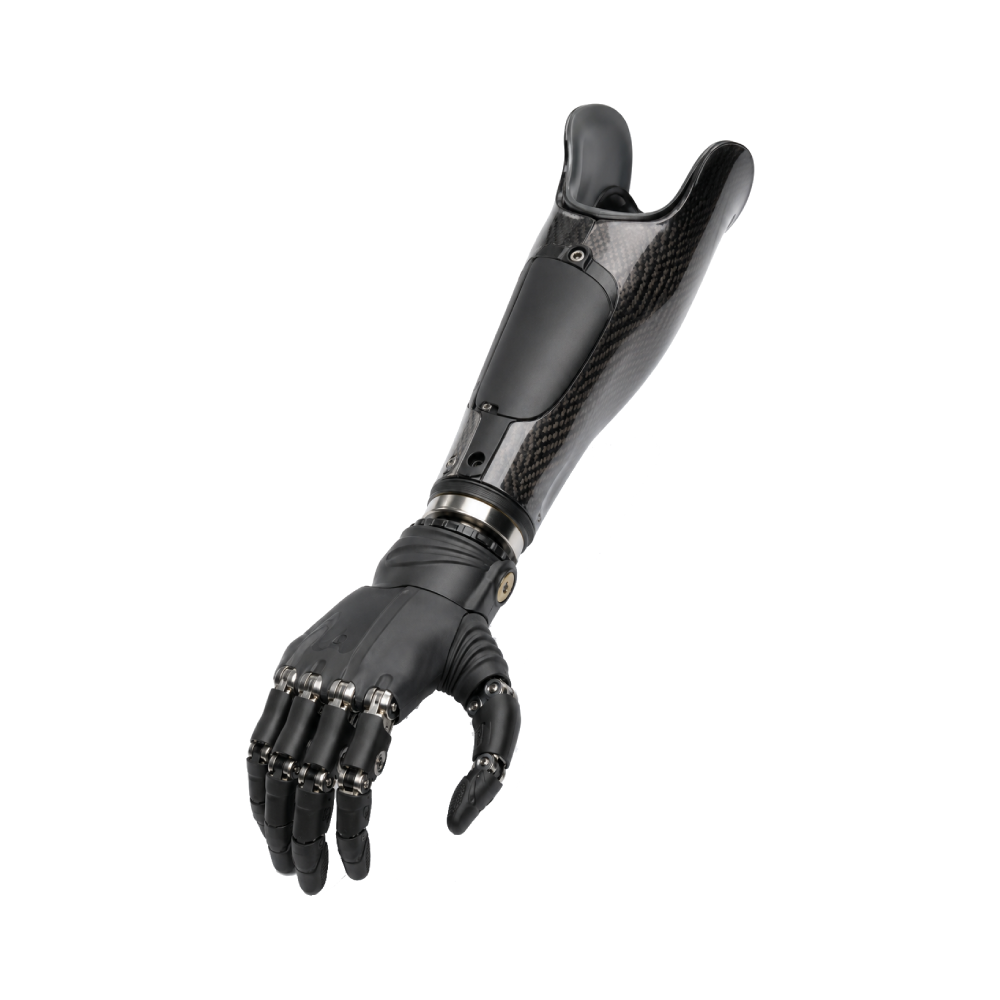


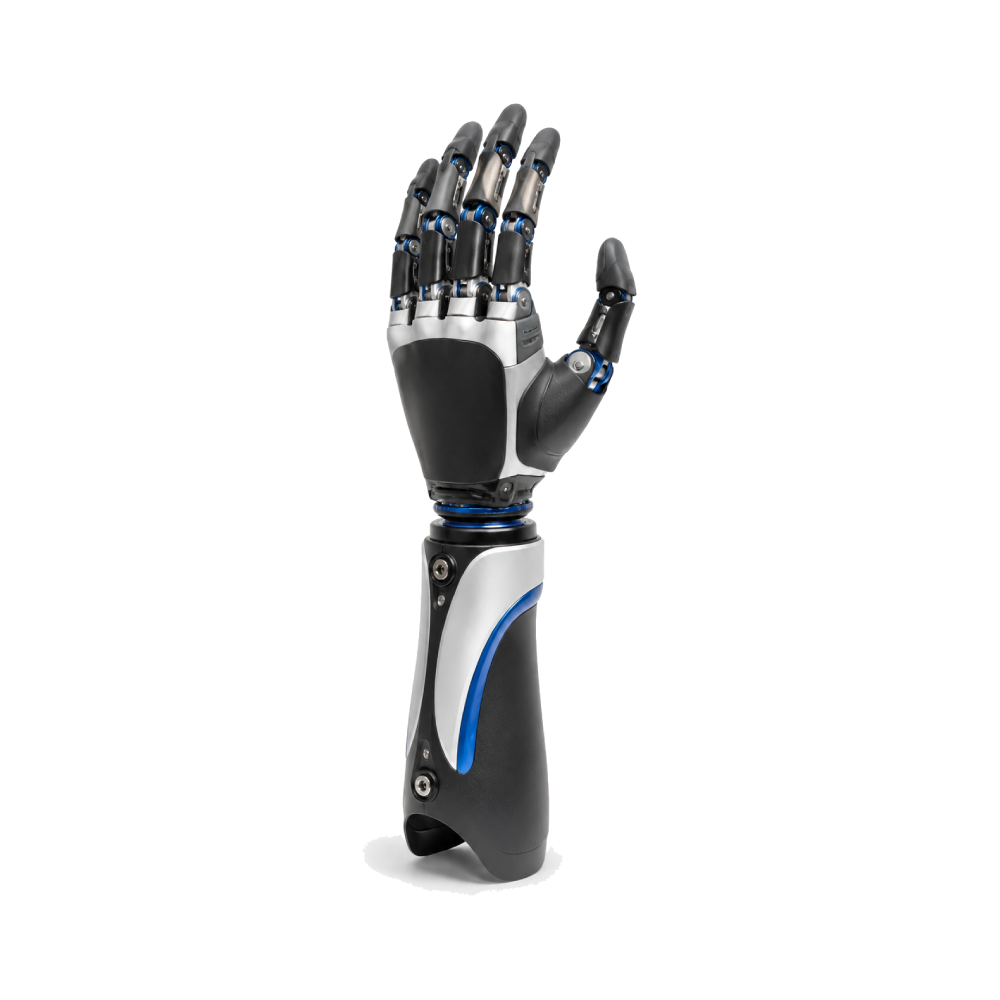
Smart Control for Natural Hand Movement
Product Type: Myoelectric Prosthetic Hand
Suitable For: Upper-Limb Amputees
Main Purpose: Functional Hand Movement
Control System: Muscle-Signal Controlled
Common Use: Gripping, Holding & Daily Tasks
Fit: Custom Fitted
Key Feature: Powered Hand Function
Mobility Benefit: Supports Greater Independence
Design: Functional & Modern
Care Support: Assessment, Training & Follow-up
For Assistance: 0300 2888503
Custom Solutions
Individually designed upper- and lower-limb prostheses provide a secure, comfortable, and personalized fit.
Custom Solutions
Individually designed upper- and lower-limb prostheses provide a secure, comfortable, and personalized fit.
Functional Movement
Designed to support walking, gripping, balance, and other essential everyday movements.
Functional Movement
Designed to support walking, gripping, balance, and other essential everyday movements.
Lightweight Durability
Strong, lightweight components provide dependable performance and comfort during daily use.
Lightweight Durability
Strong, lightweight components provide dependable performance and comfort during daily use.
Greater Independence
Helps users improve mobility, confidence, and independence in everyday activities.
Greater Independence
Helps users improve mobility, confidence, and independence in everyday activities.
Myoelectric Hand in Karachi, Pakistan
A myoelectric hand is an externally powered prosthetic device that uses electrical activity from selected muscles to control powered movement. The hand itself is only one part of the system. Useful control also depends on the residual limb, socket fit, electrode contact, the control method, the user’s daily goals and the training needed to operate the prosthesis consistently. Patients may call this type of device a Myo Hand, electric prosthetic hand or powered prosthetic hand. “Myoelectric hand” is the more precise clinical term. At Limb Care in Karachi, a myoelectric option should be considered as a complete upper-limb prosthetic system rather than as a stand-alone electronic hand. The final configuration and cost depend on the individual assessment and the components required.Myo Hand Price in Pakistan
The cost of a myoelectric hand in Pakistan cannot be represented responsibly by one standard figure because the hand is only one component of the prosthesis. The final system may include a custom socket, one or more electrode sites, control electronics, a powered terminal device, a wrist unit, battery, charger, cosmetic cover, fitting, setup and training. The amputation level also changes what the system needs. For example, a below-elbow myoelectric prosthesis keeps the person’s natural elbow and may require a powered hand with a suitable socket and control system. An above-elbow prosthesis may also need an elbow component and a more involved control strategy. A simpler powered hand with basic opening and closing can also differ significantly from a multi-grip system in weight, control, component requirements and maintenance. For this reason, a useful price discussion should begin with the proposed complete configuration, what is included, how it will be fitted and what follow-up support is available.What Is a Myoelectric Hand?
“Myo” refers to muscle. A myoelectric prosthesis uses electrical activity produced during voluntary muscle contraction as an input for controlling powered prosthetic components. Surface electrodes positioned at suitable muscle sites detect these signals and send them to the prosthesis control system. A typical myoelectric upper-limb system may contain the following components. The exact combination depends on the level of limb loss and the prosthetic design.| Component | Function | Why It Matters |
|---|---|---|
| Socket | Connects the prosthesis to the residual limb | Affects comfort, suspension, stability and electrode contact |
| Electrodes | Detect electrical activity from selected muscles | Reliable contact is important for consistent control |
| Control electronics | Processes the input and sends commands to powered parts | Determines how muscle signals are translated into actions |
| Battery | Supplies electrical power | Needs charging and device-specific care |
| Wrist component | Provides positioning or powered movement where included | Can affect function, length, weight and system complexity |
| Powered terminal device | Provides hand or gripping function | Its capabilities vary by model and configuration |
| Cosmetic cover | Covers or protects parts of the system where used | May affect appearance, maintenance and access to components |
How Does a Myoelectric Hand Work?
Conventional myoelectric control does not read thoughts. It detects muscle activity that the user produces voluntarily. In a simple control sequence, the user contracts a selected muscle, the muscle generates a small electrical signal, electrodes in the socket detect that activity, the control unit interprets it and a motor in the hand or other powered component carries out the assigned action. Depending on the prosthesis, muscle input may be used to open or close the hand, regulate movement, switch between functions, change grip modes or control a wrist or elbow component. Different systems use different control methods, so one myoelectric hand should not be assumed to work exactly like another.What Are Myoelectric Electrodes?
Myoelectric electrodes are sensors that pick up electrical activity from selected muscles. Their position matters because the prosthesis needs a clear and repeatable control signal. Socket movement, changes in skin contact, residual-limb volume, perspiration and the way the user activates the muscle can all influence control in some systems. This is why the electronic hand should not be evaluated separately from the socket. A technically capable terminal device can still be difficult to control if the electrodes do not maintain reliable contact during normal movement.Who May Be Assessed for a Myoelectric Hand?
A prosthetic assessment is needed to determine whether a myoelectric system is appropriate. The decision is not based on amputation level alone. The clinician may consider the condition of the residual limb, usable muscle sites, skin condition, range of motion, strength, control ability, functional goals, device weight, access to charging and the user’s willingness to train and maintain the system. Some people value powered grip and the absence of a body-powered cable system. Others may prefer a lighter, mechanically simpler or more cosmetic option for specific activities. The aim is to match the prosthesis to the person’s actual priorities rather than assume that a more complex hand is automatically more suitable.Myoelectric Hand by Amputation Level
Partial-Hand or Wrist-Level Limb Difference
Powered options at partial-hand or wrist level can differ substantially from a conventional transradial prosthesis. Available space, remaining joints, residual anatomy and the tasks the person wants to perform all influence component selection.Below-Elbow or Transradial Prosthesis
With a below-elbow amputation, the natural elbow remains. A myoelectric system may include a custom socket, electrodes, control electronics, a battery, a wrist component and a powered hand or other terminal device, depending on the design. Patients comparing options can also review Limb Care’s below-elbow prosthesis page for the broader prosthetic category.Above-Elbow or Transhumeral Prosthesis
With above-elbow limb loss, the system may also need to provide and control an elbow component in addition to the wrist and terminal device. This can increase overall weight, the number of components, control demands and training needs. Powered above-elbow systems can still be considered, but the assessment must account for the added system complexity.Single-Grip vs Multi-Grip Myoelectric Hands
A simpler powered hand may focus mainly on basic opening and closing or a smaller number of functions. A multi-grip prosthetic hand may offer several selectable grip patterns for different object shapes or tasks, such as power-type, pinch-type or lateral grip concepts. The exact grips and switching methods are device-specific. More grip patterns do not automatically make a prosthesis more useful. A person should also consider how the grips are selected, how quickly they can be accessed, the weight of the complete system, learning demands, maintenance, durability and whether the available grips match real daily tasks.Myoelectric vs Body-Powered vs Cosmetic Hand
These prosthetic categories serve different goals. A fair comparison should focus on how each option is controlled, what it can do and what daily responsibilities come with it.| Feature | Cosmetic / Passive | Body-Powered | Myoelectric |
|---|---|---|---|
| Primary goal | Appearance, positioning or light passive support | Active function through mechanical control | Powered function using electrical muscle signals |
| Control | Usually passive or manually positioned | Body movement through harness/cable or mechanical linkage | Muscle activity detected by electrodes |
| Power source | No powered motor in a basic passive hand | User-generated body movement | Battery |
| Active grasp | Usually no powered grasp | Yes, depending on terminal device | Yes, depending on terminal device |
| Charging | Not usually required | Not usually required | Required |
| Weight | Varies by design | Varies by components and harness | Can be higher because of motors, battery and electronics |
| Maintenance | Usually simpler | Mechanical inspection and cable/component care may be needed | Electrical, mechanical and battery-related care may be needed |
| Training | Usually less control training | Harness/cable and task training | Muscle-signal control and functional training |
| Functional complexity | Low to moderate | Varies | Varies from simple powered control to multi-function systems |
| Cost tendency | Depends on materials and fabrication | Depends on socket and components | Often influenced strongly by powered components and control system |