


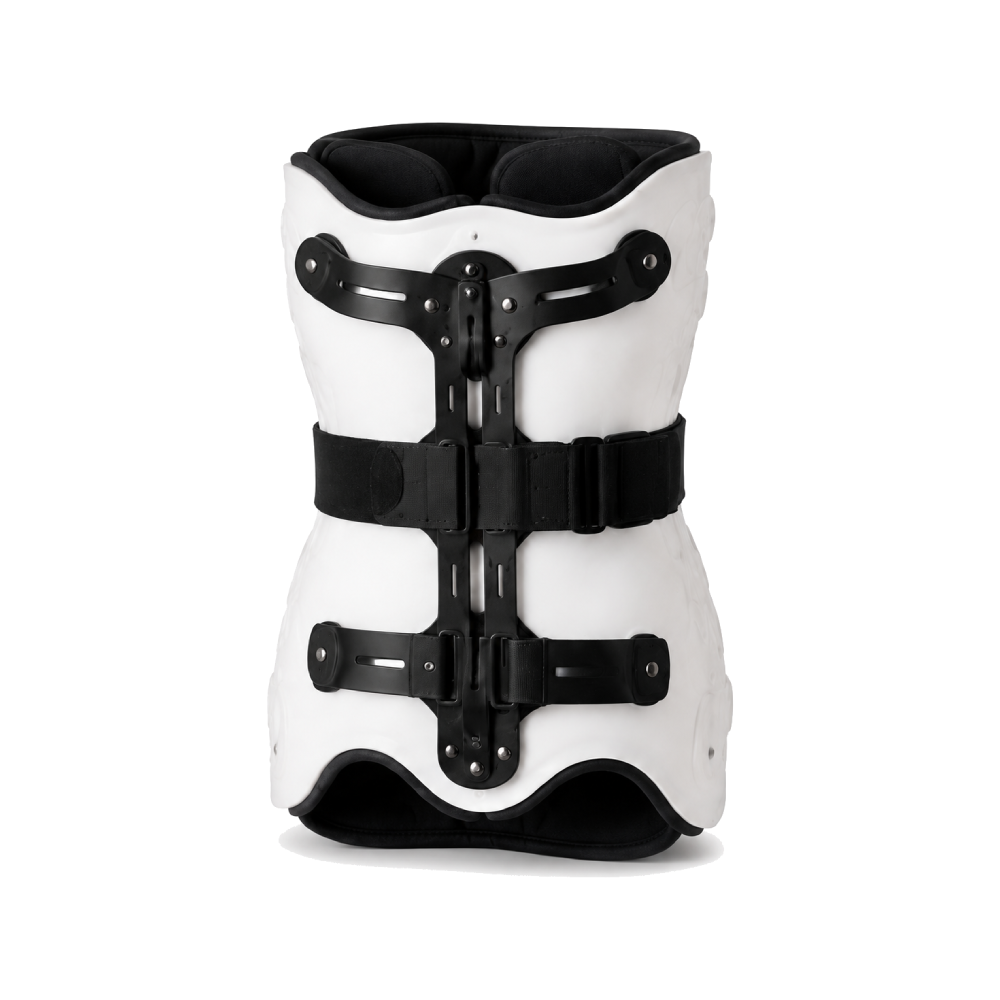
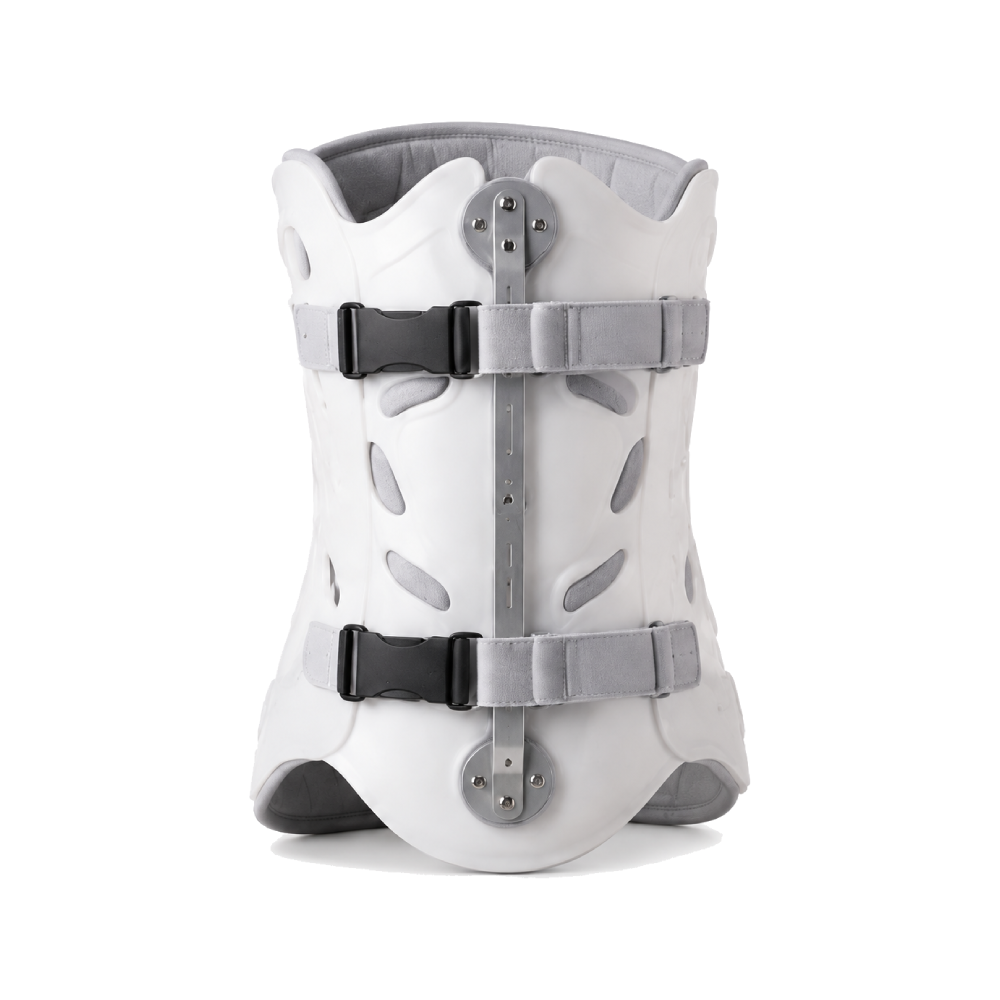
TLSO Back Brace for Structured Spinal Support
A TLSO is a more structured spinal orthosis than an ordinary lower-back belt. It extends across the thoracic, lumbar and sacral regions of the trunk, so it can provide support and control at a higher level of the spine than a simple lumbar support. The exact amount and direction of control depend on the brace design, the person’s body shape and the clinical reason for prescribing it. TLSO braces may be custom-moulded or prefabricated, rigid or semi-rigid, and made in different opening and shell configurations. Correct sizing, positioning and follow-up matter because a brace that slips, rotates or creates concentrated pressure may not work as intended. Limb Care in Karachi can be contacted to discuss the type of TLSO required, fitting needs and a current quotation.TLSO Price in Pakistan
The cost of a TLSO in Pakistan depends on the brace design and the amount of individual fitting required. A prefabricated spinal support and a custom-moulded rigid TLSO are different devices, so they should not be compared on price alone. Cost can be affected by whether the brace is custom or ready-made, rigid or semi-rigid, one-piece or two-piece, and whether moulding, corrective modifications, special trim lines, pads, straps or other adjustments are required. Adult and pediatric requirements can also differ, and some patients need more fitting or follow-up work than others. The correct brace type and fitting requirements need to be identified before an accurate quotation can be provided.What Is a TLSO?
TLSO stands for thoracolumbosacral orthosis. It is an external spinal brace designed to support or control parts of the thoracic spine, lumbar spine and sacral or pelvic region, depending on the design. A TLSO may be prescribed to limit selected trunk or spinal movements, maintain a prescribed position, support the trunk in selected conditions, or protect the spine during part of a treatment or rehabilitation plan. A TLSO does not completely prevent all spinal movement, and the purpose of the brace should be clear before it is fitted.TLSO vs LSO vs Ordinary Back Brace
The terms “back belt,” “LSO” and “TLSO” are sometimes used loosely, but they describe devices with different areas of coverage and levels of structure.| Device | Area Supported | Structure | Typical Level of Control | Common Role |
|---|---|---|---|---|
| Lumbar support / back belt | Mainly the lower back | Often flexible or semi-rigid | Lower | Compression or general lower-back support |
| LSO | Lumbar and sacral region | May be flexible, semi-rigid or rigid | More structured lower-spine control | Support or motion control across the lumbosacral region |
| TLSO | Thoracic, lumbar and sacral regions | Often more extensive and may be rigid | Higher trunk coverage and selected thoracic-lumbar control | Spinal support, movement control or corrective bracing in selected cases |
Types of TLSO Braces
Rigid Custom TLSO
A rigid custom TLSO is shaped around an individual person’s trunk rather than selected only from a standard size. It may use a structured plastic shell or a comparable rigid material. The design can include specific trim lines, relief areas or corrective pads where clinically required. Because it is made around the person’s anatomy, a custom TLSO can accommodate body shape or specific control needs that may be difficult to address with a standard-size brace. Custom manufacture is not necessary for every patient.Prefabricated TLSO
A prefabricated TLSO is manufactured in standard sizes and usually has adjustable panels, straps or closures. It may be suitable where individual moulding is not required and the available sizing provides an appropriate fit. Ready-made does not mean that fitting is unimportant. The brace still needs correct size selection, positioning and strap adjustment so that it remains secure without creating inappropriate pressure.Front-Opening TLSO
A front-opening TLSO has its opening and main closures at the front. This configuration may make access easier for some users or caregivers, but the way it should be applied depends on the exact brace and the medical instructions. Some TLSOs can be fitted while sitting or standing, while certain postoperative or injury-related braces may need to be applied while lying down. Patients should follow the method given for their own device.Two-Piece or Clamshell TLSO
A two-piece or clamshell TLSO uses separate front and back sections that wrap around the trunk and fasten together. The shell can provide structured control across a larger area of the torso. The overlap, waist position and strap tension need to match the fitting instructions. A universal step-by-step application method is not appropriate because clinical precautions differ between patients.Corrective TLSO for Scoliosis
A scoliosis TLSO is a specialized custom spinal brace used as part of management for selected growing patients. Its shape, pressure areas and relief areas are planned around factors such as curve pattern, curve location, growth and the specialist’s treatment plan. Bracing does not permanently cure scoliosis, and not every person with scoliosis needs a TLSO. The decision to prescribe one belongs to the treating clinical team.Custom TLSO vs Ready-Made TLSO
| Feature | Custom TLSO | Ready-Made TLSO |
|---|---|---|
| Fit | Shaped around the individual trunk | Selected from standard sizing |
| Body-shape accommodation | Higher ability to accommodate individual contours | Depends on the available size and adjustability |
| Construction | Usually individually fabricated or modified | Manufactured in standard configurations |
| Corrective control | Can incorporate planned pressure, relief and trim-line changes where required | Provides control according to the prefabricated design |
| Adjustability | Can be modified during fitting within the limits of the device | Often uses adjustable straps, panels or closures |
| Moulding | May involve casting, scanning or another shape-capture method | Usually not required |
| Fitting requirements | Usually more involved | Still requires accurate sizing and positioning |
| Follow-up | May require review for pressure, trim lines, growth or body changes | May require review if the brace slips, wears or no longer fits |
| Relative cost tendency | Often higher because of individual design and fitting work | Often lower where standard sizing is suitable |
Who May Be Prescribed a TLSO?
A TLSO may be prescribed in selected situations where external trunk support, spinal alignment or movement control is needed. Examples can include certain thoracic or lumbar spinal fractures, postoperative support, scoliosis, kyphosis or other selected spinal deformities, spinal instability, and some neurological or musculoskeletal conditions that require trunk support. These conditions do not automatically mean a TLSO is required. The brace design and the decision to use one should be based on the patient’s diagnosis, clinical findings and treatment plan.TLSO for Spinal Fractures
A TLSO may be prescribed for selected stable thoracic or lumbar spinal fractures when the medical team wants external support or control of selected spinal movement. The purpose can vary according to the fracture pattern and the overall treatment plan. Not every spinal fracture is treated with a TLSO. Questions about fracture healing, activity limits, lifting, exercises or when to stop wearing the brace should be answered by the treating medical team rather than by a general brace guide.TLSO After Spinal Surgery
Some patients are prescribed a postoperative spinal brace to protect or control the spine during part of their recovery. Not every spinal operation requires a TLSO, and wear schedules vary. The method of putting the brace on also matters. Some postoperative TLSOs may need to be applied while the patient is lying down, while other designs may be applied in a different position. Follow the surgeon’s, orthotist’s or hospital team’s instructions for the exact device rather than using a generic fitting routine.TLSO for Scoliosis
Custom TLSO designs may be used as part of scoliosis management in selected growing patients. The brace may use individualized shaping and planned pressure areas to influence spinal alignment while growth is still occurring. Design depends on the curve pattern and location, skeletal growth, body shape and the specialist’s treatment plan. Scoliosis bracing requires follow-up because growth and body changes can affect fit. A TLSO does not guarantee permanent correction, and it is not appropriate for every scoliosis case.How a Custom TLSO Is Made
A typical custom TLSO process may include several stages. The exact process varies by provider, device type and prescription.- Review of the clinical requirement or prescription.
- Body measurements and assessment of trunk shape and posture.
- Casting, scanning or another shape-capture method where required.
- Brace design and fabrication.
- Trial fitting and checks of the waist position and trim lines.
- Review of pressure areas, comfort and skin contact.
- Adjustment of straps and closures.
- Instructions for the patient or caregiver.
- Follow-up if fit, body shape, growth or the brace condition changes.
Why TLSO Positioning Matters
A TLSO is shaped to sit around specific anatomical landmarks. If it sits too high, too low, rotated or too loose, the brace may not provide the intended control and may create pressure in the wrong areas. The waist section should line up with the body’s waist according to the fitting instructions for that device. Straps should hold the brace in its intended position rather than allowing it to migrate during sitting, standing or walking. Complex postoperative or fracture cases should not be repositioned by trial and error without professional guidance.How Should a TLSO Fit?
A properly fitted TLSO should generally sit securely around the trunk, remain in its intended position and provide the prescribed support without excessive slipping or rotation. It should feel firm enough to work, but “as tight as possible” is not a safe fitting rule. The brace should not create concentrated painful pressure or significantly interfere with normal breathing. A TLSO also should not repeatedly rise, twist or move away from the body during ordinary activity. If the fit changes after weight change, swelling, growth or wear of the straps or padding, the brace should be reviewed. For a TLSO assessment or fitting enquiry in Karachi, contact Limb Care on 0300 2888503. If the brace has already been prescribed, bring the prescription or written instructions and any relevant reports available to you.What Should Be Worn Under a TLSO?
Many spinal-brace protocols use a thin, close-fitting and smooth cotton-type T-shirt or vest between the skin and the brace. This layer can reduce friction, absorb perspiration and help protect the skin. Thick clothing, bulky seams and folded fabric can create unwanted pressure beneath a close-fitting shell. This is especially practical in Karachi’s warm weather, where sweating under a rigid brace can increase skin irritation. A clean, dry undershirt may need to be changed more often during hot days. Loose outer clothing, including some shalwar kameez styles, may fit over the brace depending on its shape and thickness. Follow the instructions given for the specific TLSO.Skin Checks While Wearing a TLSO
A close-fitting spinal orthosis can leave temporary mild pressure marks. Skin should still be checked regularly, particularly during early use, after a major fit change, in children and in people with reduced sensation. Request a professional review if there is persistent redness, painful pressure, blistering, bruising, numbness, skin breakdown or another area that appears damaged. New or worsening symptoms should also be discussed with the treating medical team. Do not add homemade padding to a pressure area without advice. Extra padding can change how forces are distributed inside the brace and may make the problem worse.How Long Should a TLSO Be Worn?
There is no single wear schedule for every TLSO. The required time depends on the diagnosis, brace design and treatment plan. A person may be told to wear the brace while upright, during sitting and standing, for prescribed daily hours, or for most of the day in some scoliosis plans. The wearing schedule should come from the clinician or orthotist responsible for the case. Do not shorten or extend it based only on general internet advice.Can You Sleep in a TLSO?
There is no universal rule. Some people may be instructed to wear a TLSO at night, including selected patients following a scoliosis or spinal-treatment plan. Others may be told to remove it for sleep. The correct instruction depends on the brace, condition and prescription. If the written instructions are unclear, confirm them with the treating team before changing the routine.Can You Sit, Stand and Walk in a TLSO?
Many TLSOs are prescribed specifically to support or control the spine during upright activity. A person may therefore be expected to sit, stand or walk while wearing the brace. Activity rules still vary. Patients recovering from a fracture or operation may have separate precautions, and permitted mobility should follow medical or physiotherapy guidance. A TLSO should not be treated as permission to ignore those restrictions.Can a TLSO Be Worn Under Clothes?
A TLSO is commonly worn close to the body with a thin clothing layer underneath. Loose outer clothing can fit over many brace designs, but how visible the device is depends on shell thickness, straps, trim lines and clothing style. A patient who wears school uniforms or work clothing may need slightly looser garments. Comfort and correct brace position are more important than trying to hide the brace under tight clothing.Eating, Breathing and Comfort in a TLSO
A TLSO must be secure enough to provide its intended control, but poor positioning or excessive tightening should not make normal breathing difficult. Some people notice abdominal pressure, a different sitting posture or changes in comfort around meals. Persistent breathing difficulty, painful pressure or a major change in tolerance deserves review. Do not routinely loosen a medically prescribed brace for meals unless that is part of the instructions for the specific device.Getting Used to a New TLSO
A new TLSO can feel unfamiliar because it changes trunk movement, posture, sitting, balance, clothing and daily routines. Some custom brace protocols use a gradual build-up of wearing time so that skin tolerance and comfort can be monitored. There is no safe universal break-in schedule for every brace. Follow the wearing schedule given by the orthotist or medical team, and report pressure or fit problems instead of trying to “push through” significant discomfort.When a TLSO Needs Adjustment or Review
A TLSO should be reviewed when the fit or condition of the device changes. Reasons to request an assessment include:- the brace repeatedly slips, rotates or rides up;
- persistent skin marks or painful pressure develop;
- padding becomes damaged or compressed;
- plastic cracks or an edge becomes rough;
- straps or closures become worn;
- the brace can no longer be fastened correctly;
- there is unexpected movement inside the brace;
- body weight or shape changes significantly; or
- a child grows and the brace becomes tight, short or poorly positioned.
TLSO for Children and Growing Patients
Children can outgrow a TLSO as height, trunk shape and body proportions change. Straps may become too short, pressure areas can shift and the waist position may no longer line up correctly. This is especially important with scoliosis bracing, where the brace may need periodic review as the child grows. There is no universal replacement interval. Review should be based on growth, fit, wear of the device and the clinical plan.How to Compare TLSO Options Before Choosing
Before choosing or accepting a TLSO, ask questions that clarify what you are being fitted with and what happens after delivery:- Is the brace custom-made or prefabricated?
- Is it rigid or semi-rigid?
- Which parts of the spine is it intended to support or control?
- Is it front-opening, back-opening, one-piece or two-piece?
- Will measurements, casting or scanning be required?
- How will the waist and trim-line positions be checked?
- Who will perform the fitting?
- How will pressure areas and skin tolerance be reviewed?
- Are follow-up fitting adjustments available?
- Can worn straps or padding be replaced if needed?
- How will growth be handled for a pediatric brace?
- What wear schedule has the prescribing clinician recommended?
TLSO Back Brace at Limb Care in Karachi
Limb Care provides orthotic care in Karachi and can be contacted for a TLSO back brace enquiry, fitting discussion and current quotation. The exact device should be selected after clarifying the clinical requirement, the spinal region that needs support, body measurements and whether a standard-size or individually fitted design is appropriate. Patients who already have a prescription should bring it to the assessment. If a surgeon, physician or rehabilitation team has given specific instructions about brace type, opening style, wear time or application position, those instructions should also be shared before fitting. For an appointment or TLSO enquiry, call 0300 2888503 or visit Limb Care at Suit No. 28, Al Amna Plaza, Main Muhammad Ali Jinnah Road, opposite Capri Cinema, Empress Market, Karachi.Frequently Asked Questions About TLSO Braces
What is the price of a TLSO in Pakistan?
TLSO cost varies according to whether the brace is prefabricated or custom, the construction and level of fitting required, and whether individual modifications or follow-up adjustments are needed. An accurate quotation should follow identification of the required brace type.
What does TLSO stand for?
TLSO stands for thoracolumbosacral orthosis. It is a spinal orthosis that extends across the thoracic, lumbar and sacral regions of the trunk.
What is the difference between a TLSO and an LSO?
An LSO mainly covers the lumbar and sacral region. A TLSO extends higher on the trunk to include thoracic spinal control. The correct device depends on which area needs support and the required level of control.
Is a TLSO always custom-made?
No. TLSOs can be custom-moulded or prefabricated. Standard-size braces can be appropriate in selected cases, while custom designs may be used when individual anatomy, deformity or corrective pressure requires more specific accommodation.
How tight should a TLSO be?
It should be secure enough to remain in the intended position and provide its prescribed support. It should not be tightened simply “as much as possible,” and it should not create inappropriate painful pressure or significantly restrict normal breathing.
What should be worn under a TLSO?
A thin, smooth, close-fitting cotton-type T-shirt or vest is commonly used under a TLSO to reduce friction and help protect the skin. Avoid folds, bulky seams or thick layers unless the treating team gives different instructions.
Can you sleep in a TLSO?
Sometimes, but not always. Night-time use depends on the brace, diagnosis and treatment plan. Follow the written wear schedule from the clinician or orthotist.
How many hours should a TLSO be worn?
There is no universal number. Wear time may be linked to upright activity or prescribed daily hours, depending on the reason for bracing. The treating team should provide the schedule.
What should I do if a TLSO causes persistent redness or pain?
Arrange a fit review rather than modifying the brace yourself. Persistent redness, painful pressure, blistering, numbness or skin breakdown can indicate that the brace or its position needs professional assessment.