
Prosthetics


Personalized Care for Better Mobility
Product Type: Prosthetic Limb
Suitable For: Adults & Children
Fit: Custom Fitted
Usage: Daily Mobility
Support: Fitting, Adjustments & Follow-up
Consultation: Assessment Required
Material Options: Lightweight & Durable
Activity Level: Low to High Mobility
Design: Functional & Personalized
Care Plan: Ongoing Clinical Support
For Contact: 0300 2888503
Custom Solutions
Individually designed upper- and lower-limb prostheses provide a secure, comfortable, and personalized fit.
Custom Solutions
Individually designed upper- and lower-limb prostheses provide a secure, comfortable, and personalized fit.
Functional Movement
Designed to support walking, gripping, balance, and other essential everyday movements.
Functional Movement
Designed to support walking, gripping, balance, and other essential everyday movements.
Lightweight Durability
Strong, lightweight components provide dependable performance and comfort during daily use.
Lightweight Durability
Strong, lightweight components provide dependable performance and comfort during daily use.
Greater Independence
Helps users improve mobility, confidence, and independence in everyday activities.
Greater Independence
Helps users improve mobility, confidence, and independence in everyday activities.
Prosthetic Care Is Built Around the Person, Not a Standard Artificial Limb
A prosthesis is an individually configured system rather than a single standard artificial limb. Its design depends on the level of limb loss, the shape and condition of the residual limb, the person’s daily activities, the socket and suspension method, and the components needed for function. A below-knee prosthesis, for example, uses the person’s natural knee, while an above-knee prosthesis must also include a prosthetic knee. Limb Care in Karachi provides upper- and lower-limb prosthetic services with assessment, fitting, adjustments and ongoing support. The final configuration should match the person’s physical needs, mobility or hand-function goals, environment and budget. Because prosthetic systems differ so widely, cost also depends on the complete prescription rather than one fixed price. Discuss your prosthetic requirements: call Limb Care on 0300 2888503 to arrange an assessment or ask what information to bring to your visit.Prosthetics Price in Pakistan
There is no single prosthetics price in Pakistan because prostheses are not interchangeable products. The amputation level changes the parts required, and the socket, liner, suspension, joints, foot or terminal device can vary from one person to another. Custom fitting, cosmetic finishing, follow-up needs and the technology selected also affect the overall cost. A below-knee prosthesis does not require an artificial knee joint because the natural knee is preserved. An above-knee prosthesis must replace functions below the residual thigh and normally includes both a prosthetic knee and foot. These are different systems with different component requirements. Upper-limb costs also vary: a passive or cosmetic device and an externally powered prosthetic hand differ in control, hardware, fitting and maintenance needs. The useful question is therefore not only “What does a prosthesis cost?” but “What exactly is included in this prosthetic prescription?” Patients should ask what socket design, suspension, components, fitting stages, adjustments and follow-up are part of the quotation before comparing options.What Is a Prosthesis?
A prosthesis is an artificial device that replaces all or part of a missing limb. Prosthetics is the clinical field concerned with assessing the person, designing and fabricating the prosthesis, fitting it, adjusting it and managing its ongoing use. A prosthetist is the healthcare professional who assesses prosthetic needs and fits prosthetic devices. Two people with the same level of limb loss may still need different prosthetic designs because their residual limbs, strength, balance, work demands, activity levels and personal goals may differ.Types of Prosthetic Limbs
Lower-Limb Prosthetics
Lower-limb prosthetics include artificial legs for partial-foot, below-knee, knee-disarticulation, above-knee and higher-level limb loss. Component needs change with the amputation level and the person’s functional goals.Upper-Limb Prosthetics
Upper-limb prosthetics include partial-hand, below-elbow, above-elbow and higher-level prostheses. Devices may support appearance, positioning, gripping or task-specific function, with passive, body-powered or externally powered control depending on the design.Lower-Limb Prosthetics
Below-Knee / Transtibial Prosthesis
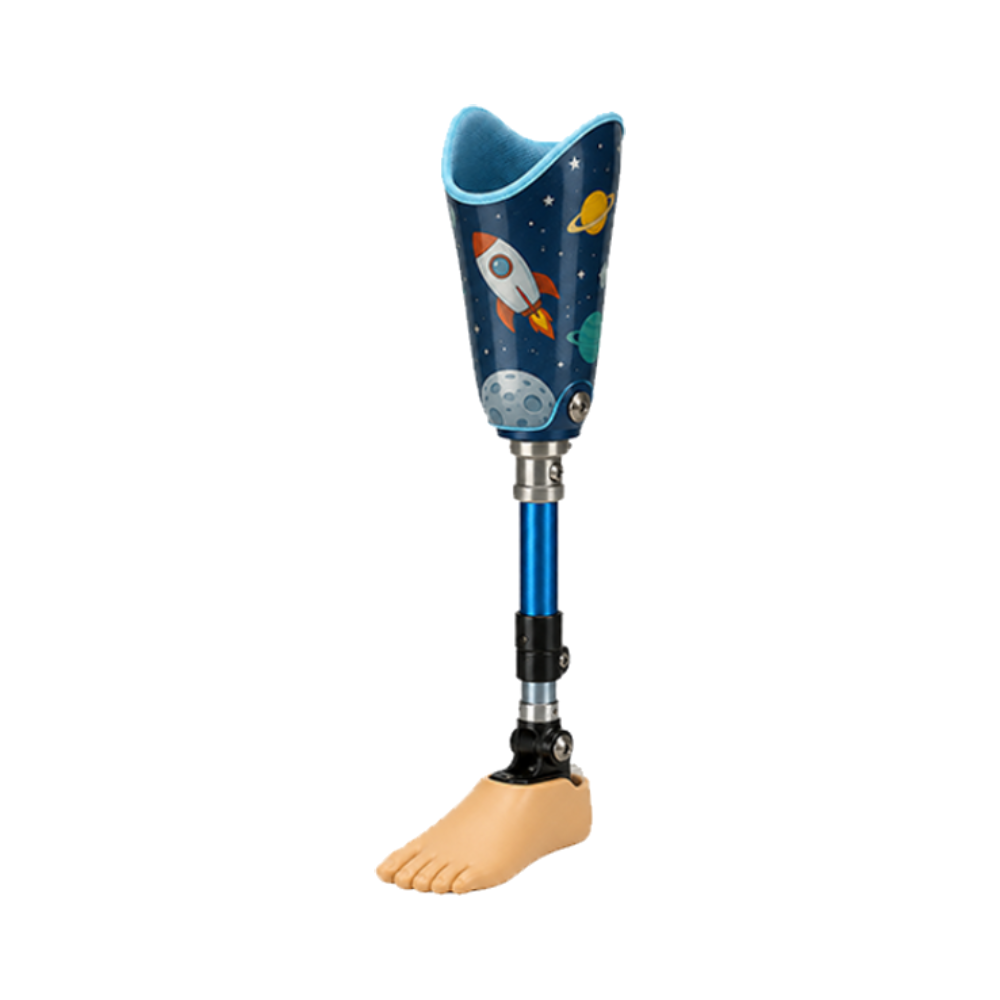
A transtibial prosthesis is an artificial leg for a person whose amputation is below the knee. Because the natural knee remains, the prosthetic system does not need a prosthetic knee joint. A typical system may include a custom socket, an interface or liner, a suspension method, adapters or a pylon, and a prosthetic foot. Keeping the natural knee changes the component requirements, but it does not make fitting automatic. Socket comfort, limb control, alignment, strength and rehabilitation still influence how the prosthesis is used.Above-Knee / Transfemoral Prosthesis
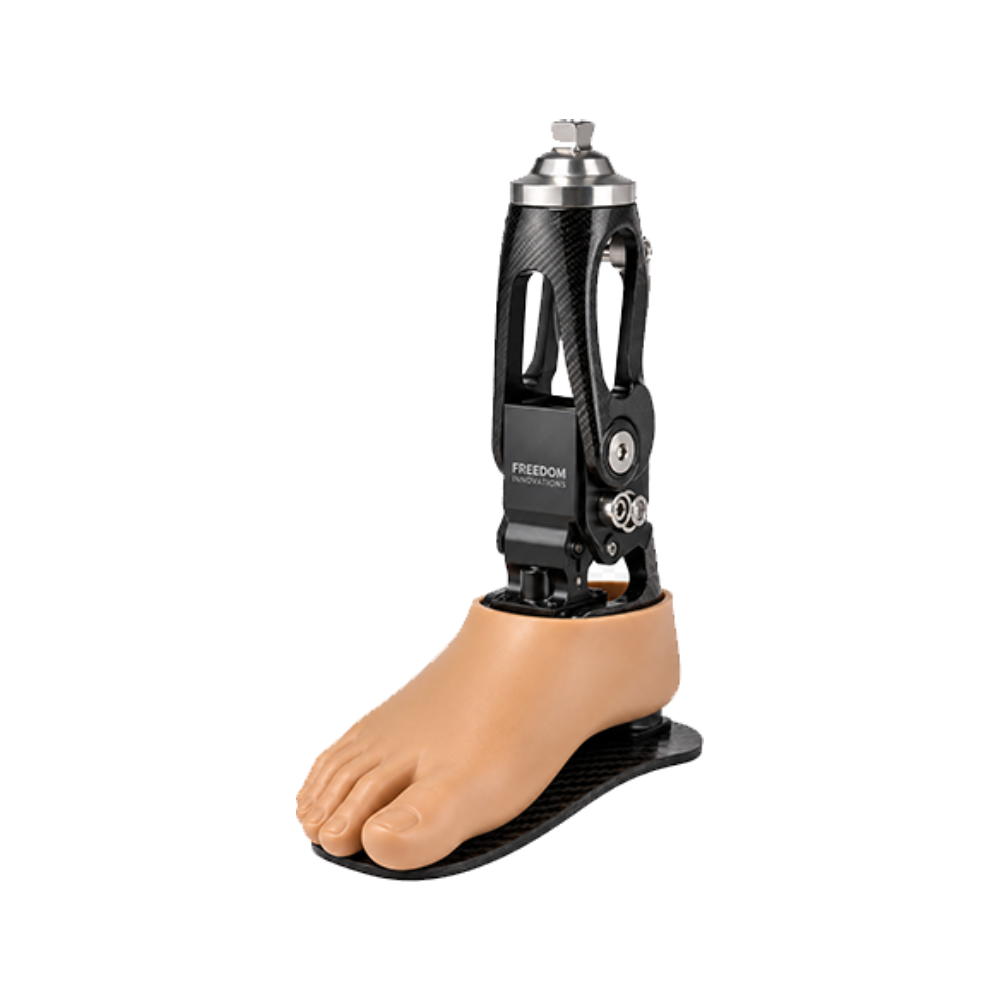
A transfemoral prosthesis is used when the limb loss is above the knee. The system must replace functions below the residual thigh and therefore usually includes a socket, suspension, prosthetic knee, connecting components and prosthetic foot. Knee selection becomes a major part of the prescription because different knee mechanisms provide different forms of stability and movement control. The appropriate knee is based on clinical assessment, balance, strength, activity, terrain, maintenance needs, component weight, cost and the user’s goals. A more complex knee is not automatically the right choice for every person.Knee Disarticulation, Partial-Foot and Higher-Level Prostheses
In knee disarticulation, limb loss occurs through the knee joint rather than through the thigh. Socket shape, available space for components and alignment can therefore differ from a standard transfemoral design. Partial-foot and ankle-level limb loss may require shorter prosthetic or orthotic-prosthetic solutions focused on restoring foot length, rollover, shoe fit and pressure distribution rather than a conventional full artificial leg. Hip-disarticulation and other very high-level prostheses are more specialised systems because they may need to replace multiple joints and require detailed functional assessment.| Level | Common Clinical Term | Natural Joint Preserved | Major Prosthetic Elements |
|---|---|---|---|
| Below knee | Transtibial | Knee | Socket, interface, suspension, adapters/pylon, foot |
| Through knee | Knee disarticulation | Hip | Socket, suspension, prosthetic knee, adapters, foot |
| Above knee | Transfemoral | Hip | Socket, suspension, prosthetic knee, adapters/pylon, foot |
| Partial foot / ankle level | Varies by level | Knee; ankle preservation varies by level | Level-specific socket/interface and foot replacement or support |
Upper-Limb Prosthetics
Partial-Hand, Below-Elbow and Above-Elbow Prostheses
Partial-hand prostheses may replace one or more fingers or a larger part of the hand. A transradial, or below-elbow, prosthesis preserves the natural elbow, while a transhumeral, or above-elbow, prosthesis may need to replace both elbow and hand or terminal-device functions. Higher limb-loss levels generally require more components and more control decisions.Cosmetic, Body-Powered and Externally Powered Options
Cosmetic or passive prostheses are mainly intended to restore form and may provide limited positioning or support depending on the design. Body-powered systems use mechanical movement, usually through a harness and cable arrangement, to operate a terminal device. Externally powered systems may use electrical signals from residual muscles to control powered components. These categories involve trade-offs in weight, control, maintenance, charging, durability, cost and training. Selection should start with the tasks the person wants to perform rather than assuming one control method is superior.Understanding a Prosthetic Limb: The Main Components
| Component | What It Does | Why Selection Matters |
|---|---|---|
| Socket | Connects the residual limb to the prosthesis and transfers forces | Fit affects comfort, control, pressure and stability |
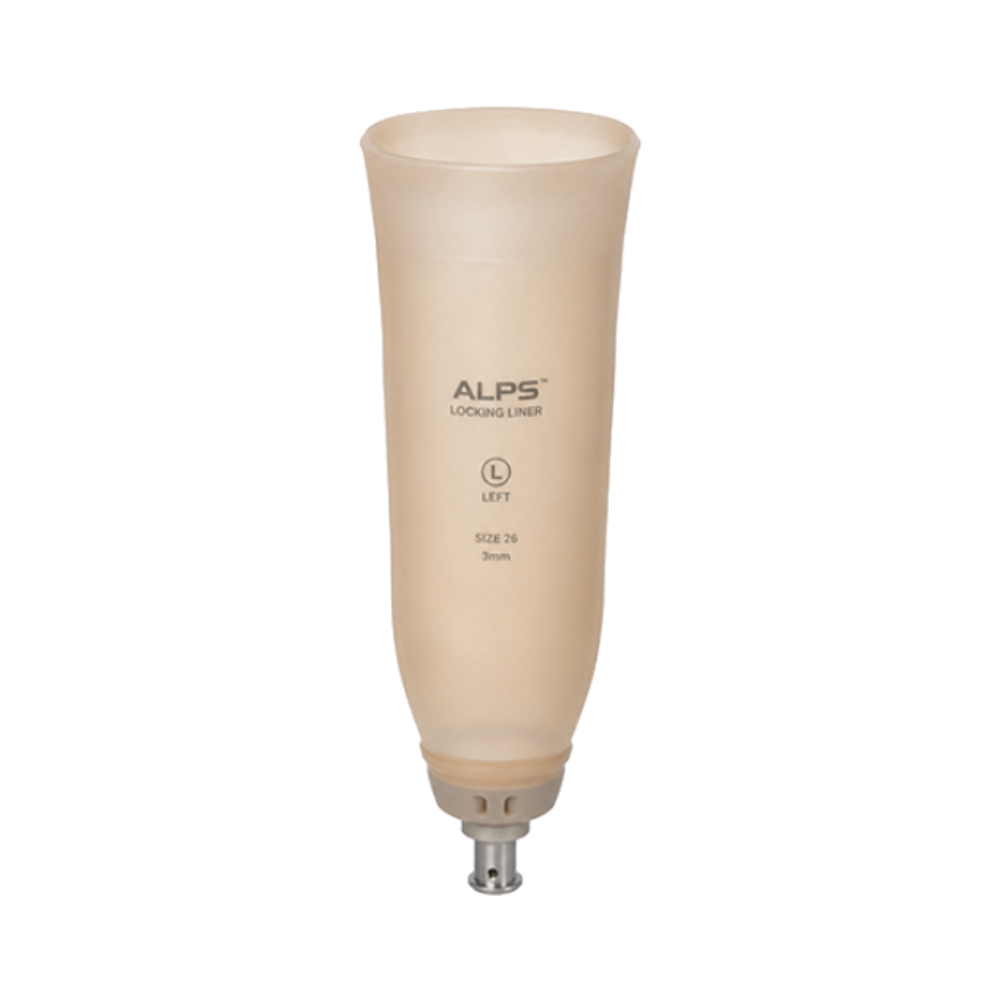
| Liner / interface | Provides a layer between skin and socket and may assist suspension | Material, thickness and fit affect skin contact and comfort |
| Suspension | Keeps the prosthesis attached during use | Needs to suit limb shape, skin, dexterity, activity and socket design |
| Pylon / adapters | Connect components and allow alignment changes | Positioning affects how forces pass through the prosthesis |
| Prosthetic foot | Supports standing and progression during walking | Different designs suit different terrain, activity and balance needs |
| Prosthetic knee | Provides knee function in above-knee systems | Stability, swing control, activity, maintenance and training needs vary by design |
| Upper-limb terminal device | Provides form, gripping or task-specific function | Control method and function should match user priorities |
Why the Prosthetic Socket Matters So Much
The socket is the custom interface between the residual limb and the rest of the prosthesis. It transfers loads, helps control the device and influences suspension and alignment. An expensive foot, knee or hand does not correct an inadequate socket fit on its own. Poor socket fit may cause pain, rubbing, skin irritation, pressure problems, excessive movement inside the socket or difficulty controlling the prosthesis. Fit can also change over time because residual-limb volume is not fixed. Postoperative swelling may reduce, muscle shape can change, body weight can change and daily fluid variation can alter how the limb sits in the socket. Limb Care has dedicated information on prosthetic socket technology and prosthetic liners for patients who need more detail on these parts of the system.Prosthetic Suspension Options
Suspension keeps a prosthesis attached to the residual limb during movement. Common systems include pin-lock liners, suction, elevated vacuum, sleeves, anatomical suspension and straps or belts in selected cases. Selection may depend on residual-limb shape, skin condition, hand dexterity, activity level, volume changes, socket design and personal preference. A secure system that is difficult for a particular user to put on independently may not be the most practical choice. Heat and sweating in Karachi can also affect liner comfort and skin management, so the interface should be discussed as part of the fitting rather than treated as a minor accessory.Choosing a Prosthetic Foot
Prosthetic feet range from cushioned or SACH-type designs to single-axis, multi-axis, dynamic-response and more adaptive systems. These categories describe different mechanical behaviour, not a universal quality ranking. Foot selection should consider walking goals, usual surfaces, body weight, balance, footwear, work demands and compatibility with the rest of the prosthesis. A person who mainly walks indoors has different requirements from someone who regularly covers uneven streets, ramps and longer community distances. Material alone does not determine whether a foot will be suitable.Choosing a Prosthetic Knee
Above-knee prostheses may use locked or other mechanical knees, polycentric mechanisms, hydraulic or pneumatic systems, and microprocessor-controlled knees. These systems manage stability and movement in different ways. Selection considers stability, balance, strength, walking speed, terrain, weight, maintenance, charging where applicable, training and cost. Microprocessor control may offer additional features for selected users, but it does not guarantee normal walking, effortless stairs or freedom from falls.Custom Prosthesis vs a “Standard” Artificial Limb
Manufactured prosthetic components may come in standard models and sizes, but the complete prosthesis still has to be configured for the individual. The socket is especially person-specific because it must match the residual limb and distribute forces appropriately. Alignment and suspension also need adjustment for the person using the device. A definitive prosthesis should not be selected by height, shoe size or a catalogue image alone. Component specifications matter, but fit and clinical configuration determine how the parts work together.How Prosthetic Assessment and Fitting Works
A typical prosthetic fitting process may include a medical and functional history, residual-limb and skin assessment, review of range of motion and strength, discussion of daily activities, measurements, casting or scanning where appropriate, socket design, component selection, alignment, trial use, adjustments, final finishing and follow-up. Many workflows use a diagnostic or test socket before the definitive socket. This temporary stage allows the prosthetist to check pressure, limb position, suspension and overall fit, then modify the shape before final fabrication. Static alignment is first assessed while standing or positioning the limb; dynamic alignment is refined during walking or task performance where appropriate. Alignment matters because the socket and components must work together relative to the residual limb, joints and ground. In lower-limb prosthetics, poor alignment can affect stability, pressure distribution, step pattern and prosthetic control.Prosthetic Rehabilitation and Training
Receiving the device is only one part of prosthetic care. Lower-limb rehabilitation may include balance, weight transfer, safe donning and doffing, walking practice, ramps, stairs, uneven surfaces and the use of a cane, crutch or other assistive device when needed. The aim is not to force every person toward the same walking pattern, but to develop safe and useful function for that individual. Upper-limb training may cover donning and doffing, device control, positioning, object handling and relevant daily tasks. Training needs vary by device and user.When Is Someone Ready for Prosthetic Fitting?
There is no universal number of weeks after amputation that makes every person ready for a prosthesis. Readiness depends on wound healing, skin condition, swelling, residual-limb shape, pain, joint movement, medical stability, strength and functional goals. Some people also need more time for medical or rehabilitation reasons before loading the limb in a prosthetic socket. A prosthetic assessment should therefore consider the person’s current condition rather than relying on a fixed calendar date.Residual-Limb Changes, Discomfort and Adjustments
Residual limbs can change in size and shape after amputation and during long-term prosthetic use. Swelling reduction, muscle changes, body-weight changes, activity and fluid shifts can make a previously comfortable socket feel loose or tight. Management may involve prosthetic socks, liner changes, socket adjustments or, in some situations, a replacement socket. Persistent discomfort should not simply be tolerated. Arrange prosthetic review if there is new pain, persistent redness, blistering, skin breakdown, numbness, unusual swelling, excessive movement in the socket, difficulty putting the prosthesis on, or a clear change in walking or control. These signs can have different causes, so they should be assessed rather than self-diagnosed.How Long Does a Prosthesis Last?
There is no single lifespan for a complete prosthesis. The socket, liner, suspension parts and mechanical components may wear or become unsuitable at different rates. A foot or knee may still function while the residual limb has changed enough that the socket no longer fits properly. Activity, body weight, environment, maintenance and component type also affect wear. Regular review helps identify whether the issue is routine adjustment, a worn part, a changing socket fit or a need to reconsider the overall prescription.Prosthetics for Children
Children need closer review because growth can quickly change socket fit, alignment and component height. Their activity and functional goals also change over time. A paediatric prosthesis may therefore need modification or replacement more often than an adult system, but there is no universal replacement interval that applies to every child.Local vs Imported Prosthetic Components
Prosthetic systems may combine a locally fabricated custom socket with manufactured components from different suppliers. “Local” and “imported” are not reliable quality labels on their own. Patients should ask whether the component is appropriate for their body weight and activity, whether it is compatible with the rest of the system, how it can be serviced, whether replacement parts are available and what maintenance is expected. In Pakistan, access to follow-up, servicing and replacement parts can be as important as the initial specification.How to Compare Prosthetic Options Before Choosing
Before paying for a prosthesis, ask what the complete system includes:- What amputation level and functional goals is this prosthesis designed for?
- What socket design, liner or interface, and suspension system are proposed?
- Which foot, knee or upper-limb terminal device is included, and why was it selected?
- Will a diagnostic or test socket be used where appropriate?
- What fitting and alignment adjustments are included?
- What training or rehabilitation is recommended or coordinated?
- What follow-up is included, and who will perform future adjustments?
- What happens if the residual limb changes size?
- Are replacement parts and maintenance support reasonably accessible in Pakistan?
- Who is responsible for the clinical fitting of the prosthesis?