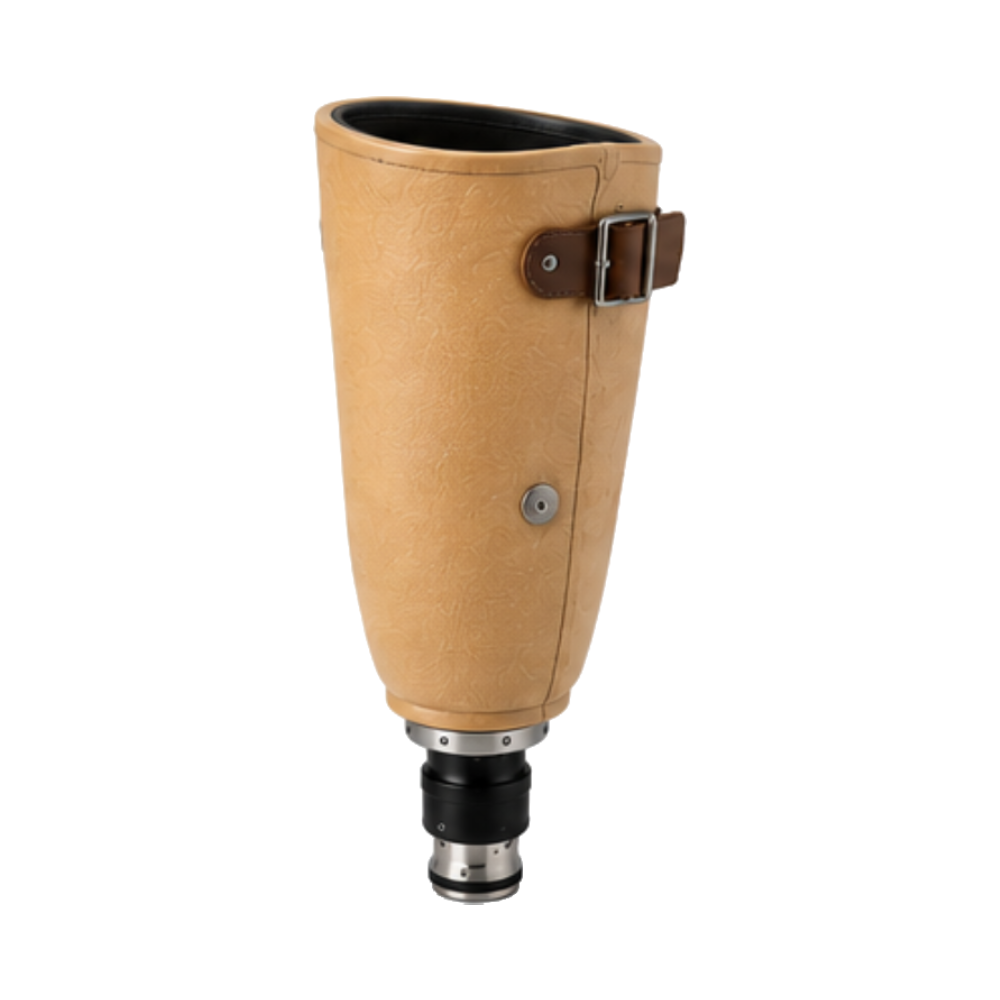
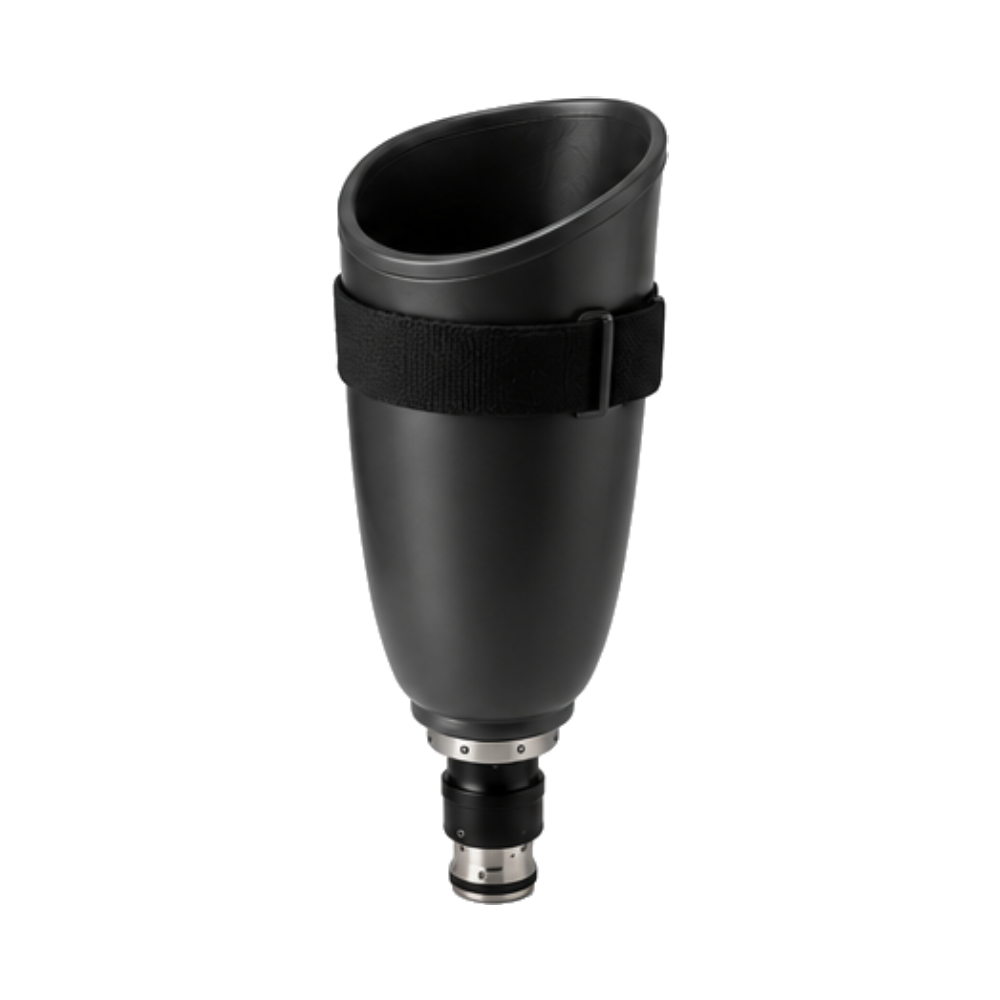
Custom Below-Knee Prosthetic Sockets in Karachi, Pakistan
A below-knee socket is the custom interface between the residual lower leg and the rest of a transtibial prosthesis. Because the natural knee remains, the socket must stay secure without unnecessarily restricting knee movement while managing forces during standing and walking. Socket care involves more than material choice: pressure distribution, liner or interface, suspension, residual-limb volume, diagnostic fitting, alignment and follow-up all affect the result. Limb Care provides custom prosthetic fitting and adjustment support in Karachi for people considering a first socket, dealing with fit problems or discussing replacement.
Below Knee Socket Price in Pakistan
There is no single standard price for a below-knee socket because a transtibial socket is fitted to one residual limb rather than selected from a size chart. Cost may vary with the socket concept, residual-limb anatomy, liner or interface, suspension hardware, materials, diagnostic fitting needs and the amount of modification required before final fabrication. A pin-lock configuration, for example, has different liner and hardware requirements from a suction, sleeve or vacuum-assisted setup.
A replacement socket for a mature residual limb may also involve a different process from an early fitting while limb volume is still changing. A useful quotation starts with assessment of the limb, present prosthesis if any, skin condition, activity needs and the reason a new socket is being considered. Patients can
contact Limb Care to discuss assessment and a current quotation.
What Is a Below-Knee Prosthetic Socket?
A below-knee prosthetic socket, or transtibial socket, is the shaped structure that surrounds the residual lower leg. It connects the user to the structural parts and prosthetic foot while transferring load, helping control movement and contributing to suspension. The socket must account for the tibia, fibula, soft tissue, scars or sensitive areas when present, and movement of the natural knee.
Socket fit is foundational, but it is not the only factor in successful prosthetic use. Suspension, alignment, the foot, rehabilitation, health and user goals also matter. For broader socket principles, see Limb Care’s
prosthetic socket technology section; for the complete prosthesis rather than the socket alone, see the
below-knee prosthetics page.
Why Below-Knee Socket Fit Matters
The socket interacts with skin, soft tissue, the tibia and fibula, residual muscles, scars and other sensitive structures during standing, walking, sitting and transfers. Poor fit can contribute to painful pressure, rubbing, skin irritation, blistering, excessive movement, reduced control or reduced prosthesis use, although pain and skin problems can also have other causes. Residual-limb volume changes are important because even a previously suitable socket can become relatively loose or tight.
Comfort Is Not the Only Test
A socket should not be judged only by whether it feels soft at rest. Fit also involves pressure distribution, suspension, control, residual-limb movement, knee motion, skin response, stability and function. A loose socket may initially feel easy yet move excessively; an overly tight socket may feel secure while creating harmful pressure. The goal is an appropriate balance for the individual limb and complete prosthetic system.
PTB vs TSB Below-Knee Socket
Patellar Tendon Bearing (PTB) Socket
A patellar tendon bearing socket uses selective pressure management. Its shape places relatively more load through areas judged able to tolerate it while relieving more sensitive structures, which may include the tibial crest, fibular head and distal tibia. PTB does not mean that all body weight is carried through the patellar tendon.
Total Surface Bearing (TSB) Socket
A total surface bearing socket aims to distribute load more broadly over the residual-limb surface, often with a compliant liner. TSB does not mean equal pressure at every point and does not guarantee absence of pain or skin problems.
Modified and Individualized Socket Designs
Clinical fittings often adapt traditional principles around limb shape, scars, soft tissue, bony prominences, liner choice, suspension, activity and volume changes. Evidence has not established one universal transtibial socket concept as best for every user.
PTB vs TSB Comparison
| Feature |
PTB |
TSB |
| Load concept |
More selective loading and relief |
Broader surface loading |
| Interface |
May use foam, liner or another interface |
Often paired with a compliant liner |
| Pressure management |
Contours emphasize tolerant and sensitive areas |
Aims for wider contact without equal pressure everywhere |
| Clinical choice |
Depends on anatomy, skin, tissue, volume, suspension, activity and fitting response |
Socket vs Liner vs Suspension
| Part |
What it is |
What it does |
| Socket |
Structure around the residual limb |
Transfers load and helps control the prosthesis |
| Liner |
Interface worn between skin and socket in many systems |
May cushion, manage friction and contribute to suspension |
| Suspension |
Method that keeps the prosthesis attached |
Limits unwanted separation during movement |
What Is a Prosthetic Liner?
A prosthetic liner is a removable interface used in many, but not all, transtibial systems. Depending on material and design, it may provide cushioning, manage friction and contribute to suspension. Common categories include silicone, thermoplastic elastomer or gel, polyurethane and foam or Pelite-type interfaces. Choice depends on skin, limb shape, suspension, perspiration, donning ability, cleaning and local replacement availability. See Limb Care’s
prosthetic liners section for related information.
Silicone vs Gel vs Foam/Pelite Interfaces
Silicone, gel/TPE, polyurethane and foam interfaces differ in grip, cushioning, flexibility, heat retention, cleaning needs, durability and suspension compatibility. Research does not support a simple rule that one liner type is superior for every user. In a hot climate, perspiration and skin response deserve attention regardless of material.
How Does a Below-Knee Socket Stay Attached?
Pin-Lock Suspension
A compatible liner has a distal pin that engages a mechanical lock. It provides clear mechanical attachment, but fit still matters because unwanted movement or distal traction can occur in some users.
Suction and Sleeve Suspension
Suction uses a close socket fit with an appropriate seal and air-management method. An external sleeve can provide or assist suspension, but may affect heat, sealing, knee movement and maintenance.
Elevated Vacuum and Anatomical Suspension
Elevated vacuum maintains reduced pressure within a sealed socket system. It may help suspension and residual-limb fluid management for selected users, but individual responses vary. Supracondylar contours or cuff straps can also provide or assist suspension in suitable designs.
Pin Lock vs Suction vs Elevated Vacuum
| Feature |
Pin lock |
Suction |
Elevated vacuum |
| Retention |
Mechanical pin and lock |
Close fit with seal/air management |
Reduced pressure in a sealed system |
| Interface |
Locking liner |
Suitable seal or sealing liner/sleeve |
Sealed interface plus vacuum components |
| Pistoning |
Depends on fit and system |
Can provide close suspension |
May reduce movement in selected users |
| Volume management |
Usually managed separately |
Depends on limb and system |
May help some users; results vary |
| Maintenance |
Lock and liner care |
Seal, valve or sleeve care |
Additional components require maintenance |
No single suspension system is the standard solution for every transtibial user. Anatomy, skin, volume changes, knee motion, dexterity, activity, climate, maintenance and preference all affect selection. During an assessment, patients can ask which suspension options are available for their case and what each option would mean for donning, knee movement, maintenance and follow-up.
What Is a Diagnostic or Test Below-Knee Socket?
A diagnostic socket, also called a test or check socket, is a temporary fitting socket used in many workflows before the definitive socket is completed. It can help assess socket volume, residual-limb position, pressure, suspension, knee movement, standing, walking and alignment. Some are made from clear thermoplastic to make fit assessment easier.
Diagnostic Socket vs Definitive Socket
| Diagnostic socket |
Definitive socket |
| Temporary and used for evaluation |
Intended for ongoing use after major fit requirements are established |
| Often easier to modify during trials |
Uses the selected final construction and finish |
| Helps test fit, suspension and alignment |
Still needs follow-up as the limb and use pattern change |
How a Below-Knee Socket Is Fitted
A typical fitting may include residual-limb history, skin and scar review, bony prominence assessment, knee range of motion, measurements, volume assessment, interface and suspension planning, and shape capture. The clinician may then use a diagnostic fitting where appropriate, assess standing and walking, review skin and pressure response, refine suspension and alignment, and proceed to definitive fabrication.
Fit should be checked dynamically. A socket that feels acceptable while sitting can behave differently under body weight or during gait.
Casting vs Digital Scanning
Residual-limb shape may be captured by manual plaster casting, digital scanning or a hybrid process. Digital systems can support efficient recording and transfer of geometry; manual casting allows direct hands-on positioning and traditional modification. Neither method guarantees fit by itself because pressure management, volume decisions, suspension and clinical fitting remain essential.
Below-Knee Socket Materials
Socket construction may use thermoplastics, laminated composites, carbon-fiber-reinforced composites, flexible inner materials and foam interfaces. Material can affect rigidity, weight, durability and adjustability, but material alone does not determine fit.
Does Carbon Fiber Make a Better Socket?
Not automatically. Composite reinforcement can influence strength, stiffness and weight, but a carbon socket can still fit poorly. Fit depends on socket shape and volume, interface, suspension, alignment and clinical fitting.
Why Residual-Limb Volume Changes Matter
The residual limb can change during healing, across the day, with activity and fluid shifts, and over longer periods with body-weight or muscle changes. Those changes can alter suspension, pressure, skin response and control. Volume management is therefore part of both day-to-day socket use and decisions about adjustment or replacement.
What Are Prosthetic Socks?
Some transtibial systems use prosthetic socks of different thicknesses to accommodate certain volume changes. Not every suspension system uses them, and exact sock management is prosthesis-specific. Large or repeated changes may indicate a broader fit problem that needs review.
What If a Below-Knee Socket Becomes Loose?
Signs can include pistoning, rotation, rubbing, reduced control, the limb dropping deeper into the socket or difficulty maintaining suspension. Causes may include volume loss, liner or sleeve wear, suspension problems or a socket that no longer matches the limb. Persistent looseness should be reviewed rather than managed with improvised household padding.
What If the Socket Feels Too Tight?
Swelling, volume increase, interface changes or socket mismatch can make the fit too tight. Painful pressure, numbness, unusual swelling, colour change or inability to fully don the prosthesis are reasons to stop forcing the fit and arrange review.
What Is Pistoning?
Pistoning is repeated up-and-down movement between the residual limb and socket during use. Excessive pistoning can increase friction, irritate skin and reduce suspension or control. The clinical concern is excessive movement or movement linked with symptoms, not the expectation of absolute zero motion.
Why Does a Below-Knee Socket Rotate?
Rotation may be related to loose fit, residual-limb shape, suspension, liner condition, activity or alignment. Persistent rotation can affect foot position, control and comfort and should be assessed professionally.
Skin and Pressure Warning Signs
Watch for persistent painful redness, recurrent rubbing, blistering, open areas, drainage, numbness, swelling or other skin breakdown. These signs do not identify the cause by themselves. Repeated pressure concerns need prosthetic review, while open wounds, drainage or signs of infection may also require medical care.
How Much Redness Is Normal?
Temporary redness can occur where a prosthesis loads the skin, but there is no universal timer that makes all redness normal or abnormal. Persistence, pain, recurrence, blistering, skin damage, unusual colour and changes in sensation matter. Concerning or repeated redness should be reviewed.
Heat, Sweat and Karachi Weather
A socket and liner create an enclosed environment around the residual limb. Karachi heat and long activity periods can increase perspiration, moisture, odour, liner movement, friction and cleaning needs. Follow the care instructions for the specific interface, dry components as directed, check the skin and seek review if sweating repeatedly leads to slipping or irritation.
Below-Knee Socket Fit for People With Diabetes or Reduced Sensation
People with diabetes, neuropathy, vascular disease, fragile skin or reduced protective sensation may not receive the same warning from pain. Careful skin checks, pressure management, medical follow-up and prosthetic review are especially important. No socket design, liner or vacuum system can guarantee prevention of ulcers or other skin problems.
Does the Socket Affect Knee Movement?
It can. Because the biological knee remains, socket trim lines, liner and suspension should be considered in relation to knee flexion. An unsuitable fit or restrictive interface may affect sitting, gait or comfort, so knee movement should be checked during fitting.
Sitting, Kneeling and Floor Activities
Daily goals may include chair sitting, low seating, kneeling, floor sitting or prayer positions. Socket trim lines, liner or sleeve bulk, suspension, knee range and residual-limb anatomy can affect these activities. Tell the prosthetist which positions matter in your routine; full kneeling, squatting or cross-legged sitting cannot be guaranteed for every user.
Can a Below-Knee Socket Be Adjusted?
Often, selected fit problems can be modified professionally. Options depend on socket material, problem location, volume change, interface and suspension. Local socket modification, interface changes, suspension review or alignment review may help; avoid DIY heating, cutting, grinding, drilling or improvised padding.
When Is a New Below-Knee Socket Needed?
Replacement may be considered when limb shape or volume changes substantially, fit problems become widespread, repeated adjustments no longer restore function, the socket is damaged, or suspension cannot be restored appropriately. A loose socket does not automatically require replacement.
Socket Adjustment vs Replacement
Adjustment may suit a localized pressure issue, small fit change or replaceable liner or suspension problem. Replacement may be considered for a large shape mismatch, widespread poor fit, structural damage or repeated unsuccessful modifications. The cause of the problem matters more than socket age alone.
How Long Does a Below-Knee Socket Last?
There is no universal lifespan. Residual-limb changes, body-weight changes, activity, materials, suspension, wear, growth and medical changes can all affect replacement timing. A socket can be structurally intact yet no longer fit appropriately.
Does a More Expensive Foot Fix a Poor Socket?
No. An advanced prosthetic foot still relies on appropriate socket fit, suspension and alignment. The foot matters to the complete prosthesis, but it cannot compensate for a socket that does not fit the residual limb appropriately.
What Does “Best Below-Knee Socket” Actually Mean?
The most appropriate socket is one that provides a clinically suitable combination of pressure distribution, suspension, skin tolerance, control, knee movement, comfort and activity compatibility for that person. PTB, TSB, pin lock, suction and vacuum are options, not rankings.
How to Compare Below-Knee Socket Options
Ask what socket concept is proposed, why it suits your residual limb, whether a liner is required, how the prosthesis will stay attached and how fit will be tested. Also ask whether a diagnostic socket is planned, how knee movement and walking will be checked, what material will be used, how volume changes will be managed, what can be adjusted later and when replacement would be considered.
It is also practical to ask whether replacement liners, sleeves, locks or valves are locally available and what follow-up is included. Comparing quotations only by carbon fiber, scanning, vacuum, imported materials or price can miss the key issue: whether the socket system can be fitted, maintained and supported for your needs.
Below-Knee Socket Care at Limb Care in Karachi
Limb Care provides custom prosthetic fitting, adjustment and ongoing prosthetic support in Karachi. A below-knee socket consultation can focus on current fit, residual-limb condition, daily activities, interface and suspension needs, and whether the issue appears suitable for adjustment or requires discussion of a new socket. Specific socket concepts, liners, suspension systems and fabrication methods should be confirmed during assessment.
For an appointment, visit Suit No. 28, Al Amna Plaza, Main Muhammad Ali Jinnah Road, opposite Capri Cinema, Empress Market, Karachi, or call
0300 2888503. You can also use the
Limb Care contact page to discuss a socket assessment, adjustment or replacement enquiry.
Frequently Asked Questions About Below-Knee Sockets
What is the price of a below-knee socket in Pakistan?
There is no single price. Cost depends on design, interface, suspension, materials, fitting needs and whether it is a first, adjusted or replacement socket.
What is a below-knee prosthetic socket?
It is the custom part of a transtibial prosthesis that surrounds the residual lower leg and connects the user to the rest of the system.
Which below-knee socket is best?
No PTB, TSB or suspension method is best for everyone. Suitability depends on anatomy, skin, volume, knee movement, activity and fitting response.
What is the difference between PTB and TSB sockets?
PTB uses more selective loading and relief; TSB aims for broader surface loading. Both require individual pressure management.
How does a below-knee socket stay attached?
Common methods include pin lock, suction, sleeves, elevated vacuum, supracondylar contours and straps.
Do all below-knee sockets need a silicone liner?
No. Silicone is one option among several interfaces, and some socket systems use other approaches.
What is a test or diagnostic socket?
It is a temporary socket used in many workflows to evaluate fit, volume, pressure, suspension, knee movement and alignment.
Why does my socket become loose or rotate?
Possible causes include volume loss, worn liners or sleeves, suspension problems, limb shape or alignment. Persistent movement needs review.
Can a below-knee socket be adjusted?
Many localized fit problems can be modified, depending on socket material, volume change, interface and suspension.
When should a below-knee socket be replaced?
Replacement may be considered for major shape change, widespread poor fit, structural damage or repeated unsuccessful adjustments.