
Finger Prosthetics


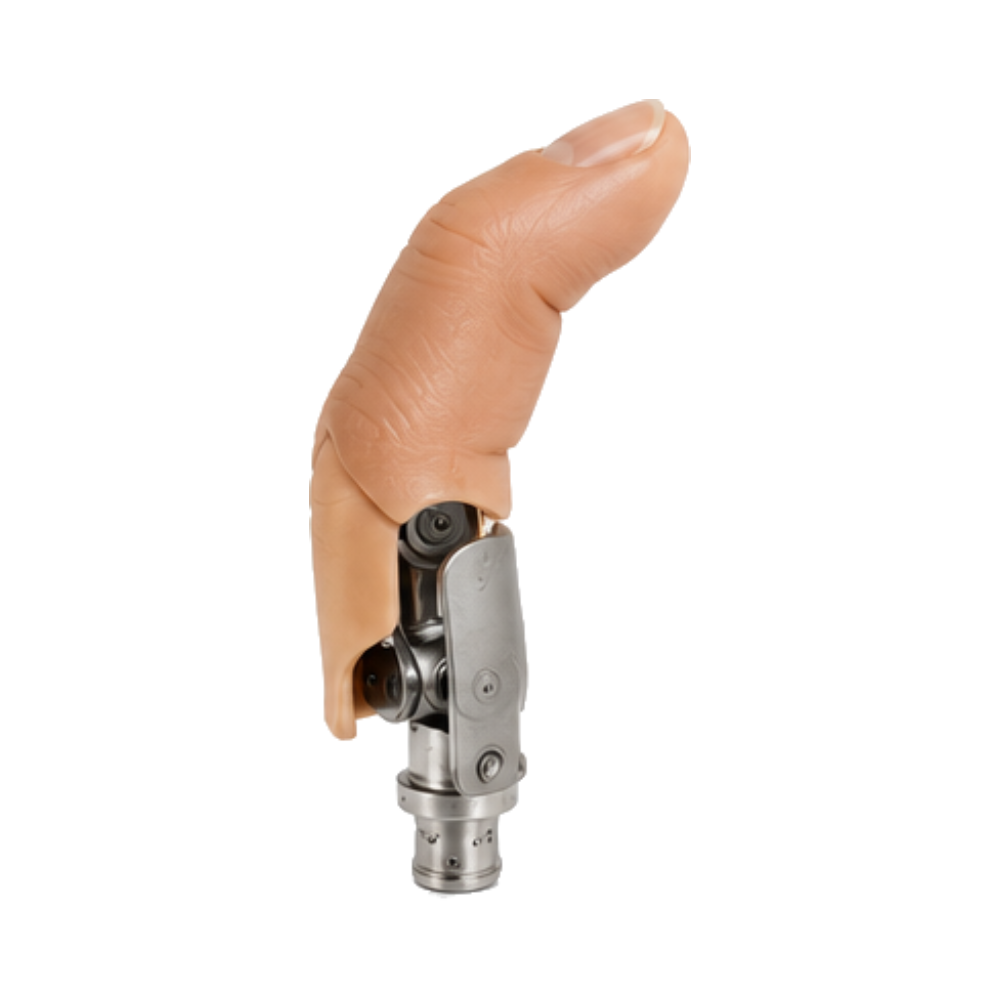

Natural Restoration for Everyday Confidence
Product Type: Finger Prosthesis
Suitable For: Partial or Complete Finger Loss
Main Purpose: Appearance, Protection & Daily Support
Fit: Custom Made to Individual Finger Shape
Material: Soft, Durable Silicone Options
Appearance: Designed for a Natural Look
Comfort: Lightweight for Everyday Wear
Key Benefit: Helps Restore Hand Appearance
Customization: Shape, Size & Skin Tone Matching
Care Support: Assessment, Fitting & Follow-up
For assistance: 0300 2888503
Custom Solutions
Individually designed upper- and lower-limb prostheses provide a secure, comfortable, and personalized fit.
Custom Solutions
Individually designed upper- and lower-limb prostheses provide a secure, comfortable, and personalized fit.
Functional Movement
Designed to support walking, gripping, balance, and other essential everyday movements.
Functional Movement
Designed to support walking, gripping, balance, and other essential everyday movements.
Lightweight Durability
Strong, lightweight components provide dependable performance and comfort during daily use.
Lightweight Durability
Strong, lightweight components provide dependable performance and comfort during daily use.
Greater Independence
Helps users improve mobility, confidence, and independence in everyday activities.
Greater Independence
Helps users improve mobility, confidence, and independence in everyday activities.
Finger Prosthetics: Cosmetic and Functional Options
An artificial finger is not one standard device. Someone replacing a missing fingertip for shape and appearance may need a very different prosthesis from someone seeking mechanical help after losing several fingers. The right approach depends on the level of loss, thumb status, remaining joints, useful natural movement, skin condition, work, daily tasks, appearance goals and how the device will stay attached. Finger prosthetics range from passive silicone restorations to mechanical digits, activity-specific devices and, in selected partial-hand cases, externally powered systems. Each category has different strengths, limits and maintenance needs. Limb Care in Karachi can assess the hand, discuss realistic goals and explain which categories may be relevant before a quotation is prepared.Prosthetic Finger & Artificial Finger Price in Pakistan
Artificial finger cost depends first on what is missing and what the prosthesis needs to do. A fingertip prosthesis, full silicone finger, artificial thumb, multiple cosmetic digits, mechanical finger and partial-hand prosthesis require different materials, interfaces and components. Price may also vary with the number of digits involved, residual anatomy, retention method, cosmetic detail, mechanical or powered components, fitting, training and imported replacement-part availability. A meaningful prosthetic finger price in Pakistan therefore usually follows assessment rather than a fixed online figure. Request a current quotation from Limb Care after discussing the level of loss and whether the priority is appearance, function or both.What Are Finger Prosthetics?
Finger prosthetics are external devices that can replace part of a digit, a complete finger, the thumb, several fingers or part of the hand. Depending on design, they may restore contour, provide a passive contact or opposition surface, support selected tasks or provide active mechanical movement. Not every artificial finger moves, grips or uses the same retention method.Start With the Level of Finger Loss
Fingertip Loss
A fingertip prosthesis may restore distal length, shape, nail appearance or a contact surface. Remaining sensitivity and anatomy influence fit and retention.Partial Finger Loss
Some natural digit remains. Residual joints can provide movement, leverage and retention, so a prosthesis should avoid restricting useful natural motion without a clear benefit.Complete Finger Loss
With little or no digit remaining, local retention may be more difficult. Some cases may suit a separate passive digit; others may need a broader hand-based interface.Thumb Loss
The thumb deserves separate planning because opposition is central to many pinch and grasp patterns. A prosthetic thumb may provide appearance, passive opposition or active movement depending on design, but it does not recreate normal biological thumb function.Multiple Finger Loss
Several missing digits do not automatically mean several separate artificial fingers. Options may include individual passive digits, a connected restoration, mechanical digits or a partial-hand system.Partial-Hand Loss
When loss extends into the palm, metacarpal area or several proximal digits, a partial-hand prosthesis may be more appropriate than treating each digit separately.Main Types of Finger Prosthetics
Passive Cosmetic Finger
Often made from silicone, a passive cosmetic finger prioritizes shape, colour, nail detail and anatomical appearance. It usually has no active joint movement but may provide a contact surface, stabilization or passive opposition in selected tasks.Passive Functional Prosthesis
Passive functional designs may provide fixed opposition, manually adjustable positioning or stable support surfaces without powered movement.Body-Powered or Mechanical Finger
Some functional digits use remaining body or joint movement to operate a mechanism. Control may come from residual finger motion, metacarpophalangeal movement, wrist motion or another linkage, depending on design.Activity-Specific Prosthesis
These devices are built around a defined task such as work, tools, sport, instruments or hobbies rather than general-purpose appearance.Externally Powered or Myoelectric Partial-Hand Prosthesis
Some partial-hand systems use batteries, motors and muscle-signal control. They may add movement or grasp options but also introduce weight, charging, training, repairs and component-availability considerations. Suitability and availability in Pakistan should be confirmed for the individual case. For broader powered upper-limb information, see Limb Care’s Myo Hand page.Compare Types of Artificial Fingers
| Type | Main Goal | Movement | Control / Power | Key Considerations |
|---|---|---|---|---|
| Passive cosmetic | Appearance, contour, passive contact | Usually none | None | Realism, retention, skin response |
| Passive functional | Opposition, positioning, support | No powered movement | Fixed or manually positioned | Useful position, stability, bulk |
| Body-powered / mechanical | Selected active function | Device dependent | Body or residual-joint motion | Control source, leverage, servicing |
| Activity-specific | Defined task | Varies | Varies | Loading, environment, safety |
| Externally powered | Powered movement or grasp options | Device dependent | Battery/electronic control | Weight, training, charging, serviceability |
Silicone Finger vs Mechanical Finger Prosthesis
Silicone and mechanical fingers solve different problems. Silicone usually emphasizes appearance and passive contact. Mechanical designs prioritize controlled movement or task performance and may involve more visible hardware, weight or maintenance.| Consideration | Silicone / Passive Finger | Mechanical / Body-Powered Finger |
|---|---|---|
| Main emphasis | Appearance and passive support | Movement and task function |
| Active movement | Usually none | May use remaining joint or body motion |
| Appearance | Can prioritize anatomical detail | Mechanisms may be visible |
| Maintenance | Cleaning and wear inspection | Cleaning plus mechanical servicing |
| Decision point | How much realism and passive support matter | What movement is needed and how it will be controlled |
Passive Does Not Mean Useless
Passive prostheses remain an established upper-limb option. Depending on design, they may support appearance, quiet use, stabilization, opposition or a specific task. A device with more moving parts is not automatically more useful.Why the Thumb, Natural Movement and Residual Length Matter
The thumb contributes to opposition, pinch and object positioning. Remaining natural joints are also valuable: movement, sensation, strength and leverage can help control a prosthesis or perform tasks without it. Residual length may affect retention, leverage and space for a mechanism, but longer residual anatomy does not guarantee a better result. Scar location, skin tolerance, joint range and the overall loss pattern also matter.What Can a Prosthetic Finger Actually Do?
Depending on the device, a prosthetic finger may restore contour, provide passive opposition, stabilize objects, support selected grasp patterns or provide active mechanical movement. It should not be expected to recreate normal grip, dexterity, biological movement or sensation.What Can a Silicone Finger Do?
Silicone finger prostheses are primarily passive and cosmetic. Published research found only small overall hand-function improvement in the studied group, with no significant increase in power or lateral grip. It is more accurate to discuss contour, contact surface, passive stabilization and selected task support than restored grip strength.Can an Artificial Finger Move or Grip?
Some can. Passive silicone digits usually do not move actively; positionable passive designs may be adjusted manually; mechanical digits may bend through body or residual-joint control; and powered systems may use motors. Functional devices can contribute to grasp or stabilization without restoring normal hand function.Can a Prosthetic Finger Feel Touch?
Conventional passive and mechanical finger prostheses do not restore normal biological sensation. Pressure or contact may sometimes be perceived through remaining tissues or transmitted through the device.Typing, Phones, Work and Daily Tasks
Typing and touchscreen use depend on the exact fingertip material, digit, residual movement and device. Daily goals may include stabilizing a phone, handling paper, using utensils, dressing or supporting two-handed tasks. For manual work involving tools, machinery, heat, dust or high force, a cosmetic finger may not be the appropriate sole device. No prosthesis should be treated as machine-safe, heat-safe or chemical-safe unless its specifications support that use.How Do Artificial Fingers Stay Attached?
Retention varies with anatomy and device. Methods can include a close-fitting sleeve, friction or anatomical retention, suction-like retention, ring retention, selected medical adhesives, a hand-based interface or another mechanical attachment. Very short residual digits can be harder to retain because there is less surface area and contour. A broader or linked interface may be needed in some cases; simply making the device tighter is not a safe universal solution.Single Artificial Finger vs Partial-Hand Prosthesis
| Decision Area | Individual Finger Prosthesis | Partial-Hand Prosthesis |
|---|---|---|
| Level of loss | Localized digit loss | Several proximal digits or hand involvement |
| Retention | Often local to residual digit/anatomy | Can use a broader hand interface |
| Natural movement | Should preserve remaining finger motion | Must account for combined thumb, finger and wrist motion |
| Goals | Cosmetic replacement, passive support or selected digit function | Multi-digit appearance, opposition or broader functional support |
| Complexity | More localized fitting | May need a more complex interface and training |
Appearance vs Function
A highly realistic cosmetic prosthesis and a functional mechanical system may prioritize different goals. Cosmetic detail can favour thin margins and anatomical contours; mechanical function may require hinges, structure and stronger interfaces. A device can combine both goals to varying degrees, but trade-offs may involve realism, weight, bulk, movement, durability, maintenance and cost. Skin tone also changes with light, circulation, sun exposure and temperature, so a perfect or invisible match should not be promised.More Technology Does Not Automatically Mean More Useful
Powered or mechanically complex devices may offer more movement, but they can also add weight, charging, repairs, training and dependence on specialized parts. Evidence comparing body-powered and myoelectric upper-limb systems does not establish one universal winner. New control strategies continue to develop, but emerging technology should not be confused with routine availability for every partial-hand case.Finger Prosthetic Assessment & Fitting
A typical assessment may consider the level of loss, thumb involvement, remaining joint movement, skin and scars, sensation, cosmetic priorities, work and important daily tasks. Measurements or an impression may be required depending on the device. Retention and interface design should be considered alongside the prosthetic category. Comfort is not the only test. A trial should also examine stability, alignment, skin response, preserved natural movement and task performance. Persistent painful redness, blistering, broken skin, swelling, new numbness, repeated slipping or excessive tightness should prompt a professional fit review rather than remote self-adjustment.Training, Care and Maintenance
Functional devices may require practice with donning, positioning, control and selected grasp patterns. There is no universal adaptation timeline. Passive silicone may need regular cleaning, stain avoidance and inspection for tears or edge wear. Mechanical systems may need joint inspection and servicing, while powered systems add charging and battery care. Karachi heat, sweating, dust and frequent washing make device-specific cleaning and interface care especially relevant.How Long Does an Artificial Finger Last?
There is no universal lifespan. Useful life depends on material, fit, activity, loading, maintenance, cosmetic wear, mechanical wear and changes in the residual anatomy. Repair, refitting or replacement should be based on condition and fit rather than a fixed interval.Finger Prosthetics for Children
Children need individualized planning because growth, hand development, school activities and goals change over time. There is no single minimum age or replacement schedule that suits every child.Does Everyone With Finger Loss Need a Prosthesis?
No. Some people function effectively without one. Others value appearance, passive support, protection, mechanical function or help with a specific task. Some people use more than one device because one prosthesis cannot meet every need.How to Compare Finger Prosthetic Options Before Paying
Ask what type of prosthesis is being quoted, what level of loss it is designed for, how it will stay attached, what movement it provides and what it cannot do. Confirm whether it actively grips or provides passive opposition, whether it preserves remaining joint movement, and what maintenance is required.- Ask about weight, bulk and the skin interface.
- Check whether parts and repairs are available in Pakistan or depend on imports.
- Discuss heat, dust, water exposure, hand washing and work demands.
- Ask whether training is required and what follow-up is included.
- Confirm who performs the fitting and which claims apply to the exact device quoted.