

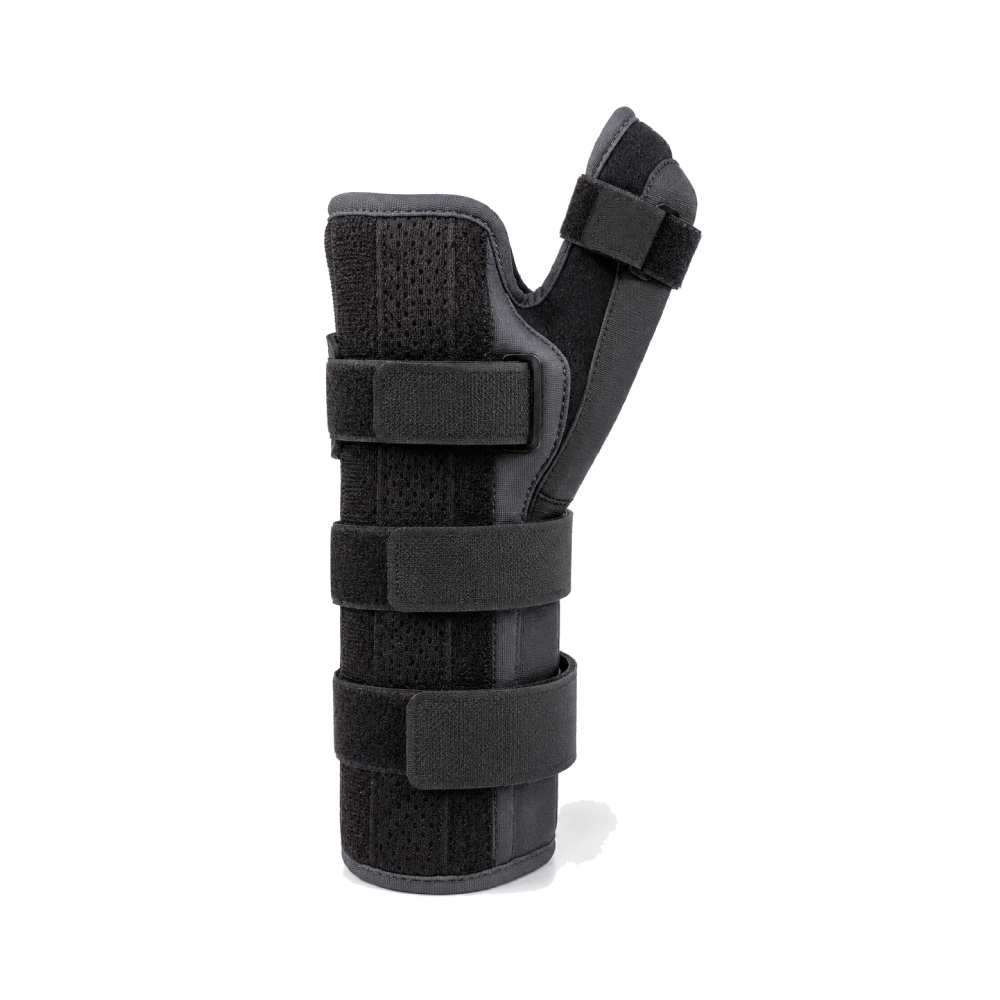


Wrist, Thumb and Orthopedic Splints in Karachi
Different splints control different joints and movements. A wrist-only splint, thumb-spica splint, finger splint and resting hand orthosis are not interchangeable, even when they look similar. The right design depends on the area that needs support, the movement that should remain available and the clinical goal. Limb Care in Karachi can help patients and families discuss splint requirements, fitting needs and whether a ready-made or custom option may be appropriate. The choice should be based on assessment rather than a product photo or symptom alone. Cost also varies with design, material, rigidity and fitting requirements. Contact Limb Care or call 0300 2888503 to discuss your splint requirement.Splints Price in Pakistan
The cost of an orthopedic splint depends on the support required rather than one standard price. A ready-made wrist support, thumb wrist splint, finger splint and custom thermoplastic hand orthosis involve different materials and fitting work. Cost can also vary with soft or rigid construction, thumb or finger involvement, custom moulding, metal stays, pediatric sizing and later adjustment. A wrist-only device may therefore differ in cost from one that supports both wrist and thumb. An exact quotation depends on the required splint and fitting needs.What Is an Orthopedic Splint?
An orthopedic splint, also called an orthosis, is an external support used to hold, protect, support or limit movement of a joint or body part. A hand or wrist splint may support an injured area, control selected movement, position a joint, reduce stress during certain activities, protect healing structures, or accommodate weakness or deformity. A splint does not heal every injury by itself, and not every painful wrist or thumb should be immobilized. Its purpose should match the condition, affected joint and treatment goal.Splint vs Brace: Is There a Difference?
The terms splint and brace often overlap. Splint commonly describes a device intended to hold or restrict a specific joint or position, while brace is a broader term for external support. Commercial products may use the words interchangeably. What matters is the actual design: which joints it supports, which movements it controls, how rigid it is and how it fits. You can also view Limb Care’s braces and broader orthotics categories.Types of Orthopedic Splints
Wrist Splint / Wrist Cock-Up Splint
A wrist splint supports the wrist while usually leaving the fingers free. Many designs use a semi-rigid or rigid stay to hold the wrist in a selected position. There is no single wrist angle that is correct for every condition. Wrist splinting may be used in selected carpal-tunnel management and other clinical situations, but numbness or wrist pain should not be diagnosed from a product description alone.Thumb Wrist Splint / Thumb Spica Splint
A thumb wrist splint, often called a thumb spica, supports the wrist and part of the thumb. Unlike a wrist-only splint, it also limits or supports thumb movement. Some designs leave the fingers free. A thumb-spica type device may be used in selected thumb injuries, De Quervain’s-type symptoms, thumb-joint problems, ligament injuries or postoperative care. The required restriction and wear schedule depend on the case.Resting Hand Splint
A resting hand splint supports a larger area of the wrist, hand and fingers in a selected resting position. It may be used when broader positioning is needed rather than wrist-only support, and some designs are custom fabricated.Finger Splints
Finger splints can support one joint, one finger or several fingers. Designs include extension splints, flexion-control splints, trigger-finger supports and mallet-finger splints. They are not interchangeable; the correct design depends on the joint and movement that need control.Custom Thermoplastic Splints
A custom thermoplastic splint is individually moulded around the wrist, hand, thumb or fingers. It can allow more specific joint control and accommodate anatomy that does not fit standard sizes well. Some thermoplastic designs can be modified during follow-up, depending on the material and construction. Custom fabrication is useful in selected cases, but it is not automatically better than a well-fitting ready-made splint.Soft / Fabric Splints
Soft splints commonly use fabric or neoprene-type material, sometimes with removable stays. They are usually lower-profile and may allow more movement than rigid devices. Greater flexibility is useful in some situations but may be unsuitable when firmer positioning or protection is required.Wrist Splint vs Thumb Wrist Splint
| Feature | Wrist Splint | Thumb Wrist / Thumb Spica Splint |
|---|---|---|
| Area supported | Mainly wrist and lower forearm | Wrist plus part of thumb |
| Wrist control | Yes, depending on design | Yes, depending on design |
| Thumb control | Usually minimal or none | Supports or limits thumb movement |
| Finger movement | Often leaves fingers free | Often leaves fingers free |
| Structure | Soft, semi-rigid or rigid | Soft, semi-rigid or rigid with thumb component |
| Fit considerations | Wrist size, side, stay position and strap pressure | Wrist fit plus thumb position and web-space pressure |
Custom Splints vs Ready-Made Splints
| Factor | Ready-Made Splint | Custom Splint |
|---|---|---|
| Fit | Standard sizes or adjustable design | Made for the individual |
| Positioning | Limited to built-in shape and stays | Can allow more specific positioning |
| Convenience | Quicker when the correct size and design are available | Requires assessment and fabrication |
| Adjustability | Usually straps, stays or product settings | May sometimes be reshaped or modified |
| Typical use | Standard support needs | Specific anatomy or positioning needs |
| Relative cost tendency | Often lower when standard sizing works | May be higher due to fabrication and fitting |
Soft vs Rigid Splints
Soft splints are more flexible and may allow greater movement. Rigid or semi-rigid splints restrict more movement and may use thermoplastic, metal stays or other structural materials. Neither is universally better. The right level of restriction depends on the clinical objective.How to Choose the Right Splint
Start with the movement that needs support or restriction. Consider the joint involved, whether the thumb needs support, whether fingers should remain free, required rigidity, swelling and hand size. Right or left side, desk or manual work, driving, daily grip demands and the need for later adjustment also matter. In Karachi’s warm weather, sweating under fabric or thermoplastic supports can affect skin comfort, so material care and cleaning instructions are practical considerations. Choosing only from a product image or general symptom can result in the wrong design. Suspected fractures, postoperative tendon repairs and new neurological problems need appropriate clinical assessment rather than self-selected immobilization. Discuss your splint requirement with Limb Care before choosing between wrist-only, thumb-supporting, soft, rigid, ready-made or custom options.Why Hand and Wrist Position Matters
Two splints can cover the same area but hold the joints differently. Wrist, thumb and finger position changes the purpose of the device. A support used during selected activities can therefore differ from a splint used after surgery or tendon repair. There is no universal angle for all splints; position depends on the clinical objective.How a Custom Splint Is Made
A typical custom-splint process may include assessment, identifying the joint and movement to support, measurements, material selection, moulding or fabrication, trimming, straps or padding, and a final fit and function check. Instructions for application, skin care and follow-up may also be included. Exact steps vary with the splint and service provider.How Should a Wrist or Thumb Splint Fit?
A splint should sit in the intended position and stay secure without excessive movement or compression. It should not create concentrated pressure or rubbing. Where the design is meant to leave fingers free, unaffected fingers should move as intended. Fit can change as swelling changes. Persistent numbness, unusual coldness, colour change, significant swelling, blistering or a painful pressure point are reasons to have the device reviewed rather than simply tolerate the fit.Comfort Is Not the Only Test
Softness alone does not show whether a splint is doing the right job. A flexible support may feel comfortable but allow too much movement for one clinical purpose, while a firmer splint may feel unfamiliar but provide appropriate control. Position, stability, movement control, skin tolerance, circulation and daily function all matter.How Tight Should a Splint Be?
A splint should be secure enough to stay in position but not excessively tight. Straps should not cause numbness, tingling, colour change, painful pressure or swelling beyond the device. If swelling changes, the fit may need reassessment.How Long Should a Splint Be Worn?
There is no universal wear schedule. Wear time depends on the diagnosis, injury, postoperative protocol, splint type, treatment goal and clinician or therapist instructions. Some splints are used during selected activities, some at night and others for longer periods. Postoperative and tendon-repair protocols can be highly procedure-specific.Can You Sleep in a Wrist or Thumb Splint?
Some wrist and thumb splints are prescribed for night use, while others are mainly used during selected daytime activities. Whether a specific splint should be worn during sleep depends on the condition, device and treatment plan.Using a Splint During Work and Daily Activities
A splint can affect grip, typing, writing, lifting, cooking, driving and tool use. Restricting wrist or thumb movement may also affect safe control of a vehicle or machinery. Activity advice should match the device and clinical situation; fingers being free does not automatically make every task safe.Skin, Swelling and Pressure Checks
Check the skin as instructed for the device. Persistent redness, blistering, skin breakdown, swelling beyond the splint, unusual coldness, colour change, numbness, tingling or increasing pain can indicate pressure or a change in fit. Thermoplastic splints can change shape with high heat. Follow the care instructions for the material, and have a damaged or poorly fitting splint reviewed rather than altering it at home unless specifically instructed.When a Splint Needs Adjustment
Review may be needed when straps no longer secure the device, material rubs, swelling changes, the splint becomes loose, pressure areas develop, a stay breaks, or thermoplastic cracks or loses shape. Children may need reassessment as they grow. Some custom thermoplastic splints can be modified, but not every splint can be adjusted safely.Orthopedic Splints for Children
Children’s hand and wrist size changes with growth. A previously well-fitting splint can become tight, and straps or edges may start creating pressure. Pediatric splinting should be reassessed when fit changes and should continue to reflect the clinical goal rather than simply using a smaller adult design.How to Compare Splints Before Choosing
Ask which joint the splint supports, whether it controls the wrist only or wrist and thumb, and whether it is soft, semi-rigid or rigid. Confirm whether it is ready-made or custom, right/left specific, what material is used and whether the position can be adjusted. Also ask whether replacement straps are available, whether later modification is possible, how the skin should be checked, whether follow-up is available and who should review the fit if symptoms or swelling change. These questions are usually more useful than choosing only by brand or appearance.Orthopedic Splints at Limb Care in Karachi
Limb Care provides orthotic care in Karachi and can discuss the type of support you have been advised to use or the movement that needs assessment. Exact splint availability, construction and fitting requirements vary, so confirm the required wrist, thumb, hand or finger design during your enquiry. Visit Limb Care at Suit No. 28, Al Amna Plaza, Main Muhammad Ali Jinnah Road, opposite Capri Cinema, Empress Market, Karachi. For an enquiry or current quotation, call 0300 2888503 or use the contact page.Frequently Asked Questions About Splints
What is the price of a splint in Pakistan?
There is no single price for all splints. Cost depends on the area supported, material, rigidity, ready-made versus custom construction, thumb or finger involvement and fitting requirements.
What is a thumb wrist splint?
A thumb wrist splint, or thumb spica, supports the wrist and part of the thumb. It provides more thumb control than a wrist-only splint.
What is the difference between a wrist splint and a thumb-spica splint?
A wrist splint mainly controls the wrist. A thumb-spica splint also supports or restricts the thumb.
Are custom splints better than ready-made splints?
Not always. Ready-made splints can work well when the correct design and size fit. Custom fabrication is useful when anatomy or positioning needs more individual accommodation.
How tight should a wrist splint be?
Secure, but not excessively tight. It should not cause numbness, tingling, colour change, swelling or painful pressure.
Can I sleep in a thumb or wrist splint?
Only when that use matches the treatment plan. Some devices are prescribed at night; others are intended mainly for daytime activities.
How long should a splint be worn?
Wear time depends on the diagnosis, splint type and treatment goal. Follow the schedule given for your specific device.
What should I do if a splint causes numbness or swelling?
Persistent numbness, swelling, colour change or painful pressure should not simply be tolerated. The fit should be reviewed.
Can a custom splint be adjusted later?
Some thermoplastic splints can be modified during follow-up, depending on the material and design. Do not attempt changes at home unless specifically instructed.