
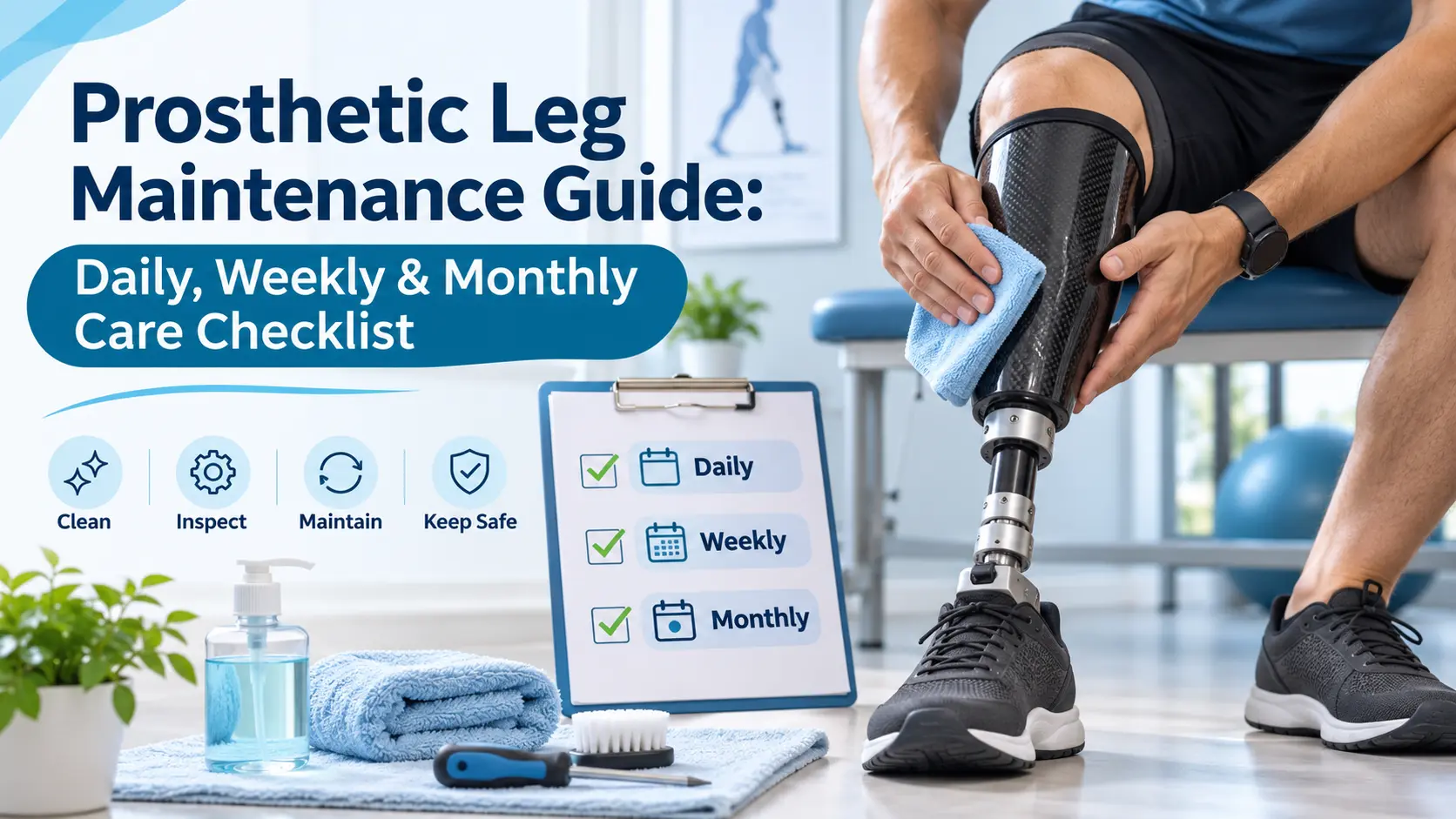
Prosthetic leg maintenance starts with five habits: check your residual-limb skin every day, clean and dry skin-contact surfaces as directed, wash your liner according to its instructions, look for damage, and report changes in fit or function. Inspect wear weekly and review gradual changes monthly. Always follow your device’s instructions and your prosthetist’s advice.
Why Is Prosthetic Leg Maintenance Important?
Hygiene and skin protection
The residual limb (the part of the leg remaining after amputation) sits inside a socket, often against a liner. Heat, sweat and friction can irritate skin, especially when moisture or soap residue remains trapped. Daily prosthetic leg hygiene helps reduce these avoidable problems.
Inspecting your skin is as important as cleaning the device. Persistent pressure marks, blisters and broken skin may signal a fit problem rather than poor hygiene. People with diabetes, poor circulation or reduced sensation should be especially careful because they may not feel early damage.
Fit, function and component condition
A prosthesis can look clean but still need attention. A worn sleeve may affect suspension; a damaged liner may rub; or a changing residual-limb shape may make a once-comfortable socket feel loose.
Routine observation helps you describe problems accurately to your prosthetist. It can reveal wear, but cannot prevent every mechanical fault.
Daily Prosthetic Leg Maintenance Checklist
Before putting on your prosthesis
- Check the entire residual limb in good light. Use a mirror or ask a caregiver to look at areas you cannot see.
- Look for new redness, swelling, blisters, cuts, unusual colour or discharge. Do not put the prosthesis over an open wound without clinical guidance.
- Make sure your skin is clean and completely dry. Avoid applying lotion immediately before wearing the prosthesis unless your clinician advises it.
- Check that the liner, socks or sleeve are clean, dry and free from folds, tears and obvious damage.
- Check that the prosthesis is intact and attaches as you were trained.
If you notice an unfamiliar pressure point or the leg suddenly feels unstable, do not force yourself to walk through it. Take the prosthesis off safely and contact your prosthetist for guidance.
After use: cleaning and skin checks
- Remove the prosthesis and recheck the skin, especially where the socket or liner applies pressure.
- Wash the healed residual limb with a gentle, fragrance-free cleanser or mild soap and water, as recommended by your clinical team. Rinse and pat dry, including skin folds.
- Clean the removable liner according to its product instructions, rinse away approved cleansers and let it dry fully before reuse.
- Clean the socket’s skin-contact interior using the method approved for its materials; never immerse the complete prosthesis.
- Change and clean prosthetic socks as directed, and leave approved components to dry in a clean, ventilated place.
Evening cleaning is often practical because it gives the skin and removable items time to dry overnight. If you sweat heavily during a Karachi summer day, you may need an additional safe break to dry your limb and change damp socks. Never resume wear with wet skin or a wet liner.
Weekly Prosthetic Leg Maintenance Checklist
Look more closely for wear
- Inspect the edges and inner surfaces of the socket for rough areas, cracks or damage.
- Examine liners, suspension sleeves and straps for thinning, stretching, splits or worn attachment points.
- Review socks for holes, flattened fabric and persistent wrinkles; replace unsuitable socks instead of patching them.
- Check accessible outer surfaces for dirt, marks or damage, and clean only where the manufacturer permits.
For above-knee users, pay attention to changes around the knee unit and its covers without opening or adjusting them. Below-knee users should also notice changes in the foot shell or shoe wear. Unusual clicking, grinding or movement is a reason to request an assessment, not to tighten a screw yourself.
Review patterns of discomfort
Think about the previous week. Did rubbing start after a longer walk? Does the leg feel different after several hours? Are you adding socks more often, if your system uses them? A brief note about when symptoms occur can be more helpful than guessing at the cause.
Repeated irritation in the same place may justify a fit review, even if it fades overnight. Mention changes in daily activity, footwear or walking surfaces to your prosthetist.
Monthly Prosthetic Leg Maintenance Checklist
Compare fit and condition over time
- Review whether the socket has become consistently tighter, looser or harder to put on.
- Note any weight change, residual-limb volume change or new daily activity that could affect fit.
- Compare the condition of removable liners, socks and sleeves with their previous state; ask about replacements if they are worn.
- Check whether a previously reported noise, skin mark or slipping problem has returned.
- Review your manufacturer’s care information and the date or plan for your next professional check.
A monthly review is not a substitute for servicing. If you use a below-knee prosthetic socket, ongoing looseness or rotation may relate to limb-volume changes, wear or suspension problems. A prosthetist should assess which factor is responsible.
Keep a simple maintenance record
Write down the date, the problem, where it occurs and what activity brings it on. You can also record when a liner or sleeve was replaced and any professional advice you received.
Bring this information to your next appointment. It helps the clinician distinguish a gradual fit change from a sudden mechanical problem and decide what needs checking.
How to Clean a Prosthetic Leg and Liner Safely
Residual limb, liner and socket: different surfaces, different care
Residual limb: Clean healed skin gently, rinse and dry thoroughly. Do not soak the limb for long periods. Discuss moisturisers, antiperspirants or medicated skin products with your clinical team, especially if you have sensitive skin, diabetes or a history of wounds. Products applied to the skin can also affect liner grip.
Removable liner: Many silicone and gel liners can be washed by hand with mild soap and water, but the correct cleanser, temperature, drying position and any machine-washing permission vary by model. Check the instructions before turning the liner inside out or washing it. Rinse thoroughly and keep it away from heaters and direct high heat while drying.
Socket: Many rigid socket interiors can be wiped with a soft cloth and an approved mild cleaning solution. Avoid soaking, flooding or spraying liquid into attached components. Different socket materials and foam interfaces may require different cleaning methods.
External parts, knees, feet and electronics
Wipe approved exterior surfaces with a suitable dry or slightly damp cloth. Do not immerse prosthetic knees, feet, pylons, connectors, vacuum systems, batteries or electronic components unless their specific manufacturer explicitly permits it. Water resistance does not always permit immersion.
Keep sand, standing water and harsh chemicals away from parts not rated for those conditions. If a component becomes wet unexpectedly, follow the manufacturer’s instructions and ask your prosthetist what to do before further use if function may be affected. Never oil or lubricate moving parts without explicit instructions.
Common Prosthetic Leg Maintenance Mistakes
Using unsuitable products or cleaning methods
Strong solvents, bleach, abrasive brushes, hot water and fragranced cleaners may damage some materials or irritate skin. Do not assume that an ordinary household disinfectant is safe for a liner or socket. Machine-washing a liner is appropriate only when its manufacturer permits it.
Drying a liner on a heater or leaving moisture trapped in the socket can create further problems. Use the cleaning and drying instructions supplied for your own components rather than copying a method used for another prosthesis.
Ignoring symptoms or attempting repairs
Do not treat repeated pain, blisters or persistent redness as something you must simply tolerate. Adding improvised padding inside the socket, cutting its edges, changing alignment or tightening bolts can make the prosthesis unsafe.
Another mistake is continuing to wear a device after discovering a crack, unstable knee, damaged suspension or unusual mechanical noise. Stop using an unsafe prosthesis and request professional advice. Home maintenance means cleaning and observation, not mechanical servicing.
When Should You Visit a Prosthetist for Maintenance?
Warning signs that need attention
Contact your prosthetist promptly if the leg starts slipping, rotating or feeling unstable; a component appears cracked or damaged; you hear new clicking or grinding; or a liner, lock or sleeve no longer functions as expected. Persistent pain, pressure marks or recurring skin irritation also deserve review.
Stop wearing the prosthesis if you develop an open sore, blister that is worsening, significant pain or unsafe instability. Seek medical assessment for broken skin, drainage, increasing warmth or swelling, spreading redness or suspected infection. Fever with a worsening skin problem needs urgent medical attention.
How often should a prosthetic leg be serviced?
There is no single servicing interval suitable for every prosthetic leg. The schedule depends on the manufacturer’s requirements, the knee or foot system, the patient’s activity, the condition of the device and the prosthetist’s follow-up plan. Devices with complex joints, electronics or vacuum systems may need specific checks.
Ask your prosthetist to explain what to inspect at home, which symptoms require an earlier appointment and when to book a routine review. Seek earlier review for sudden changes.